August 27, 2026 • Kwame Osei-Bonsu • 11 min reading time • Prices verified June 18, 2026
Blink Outdoor 4 vs. Blink Outdoor 4 XR vs. Blink Outdoor 2K+: Which Wireless Camera Actually Delivers for Your Yard
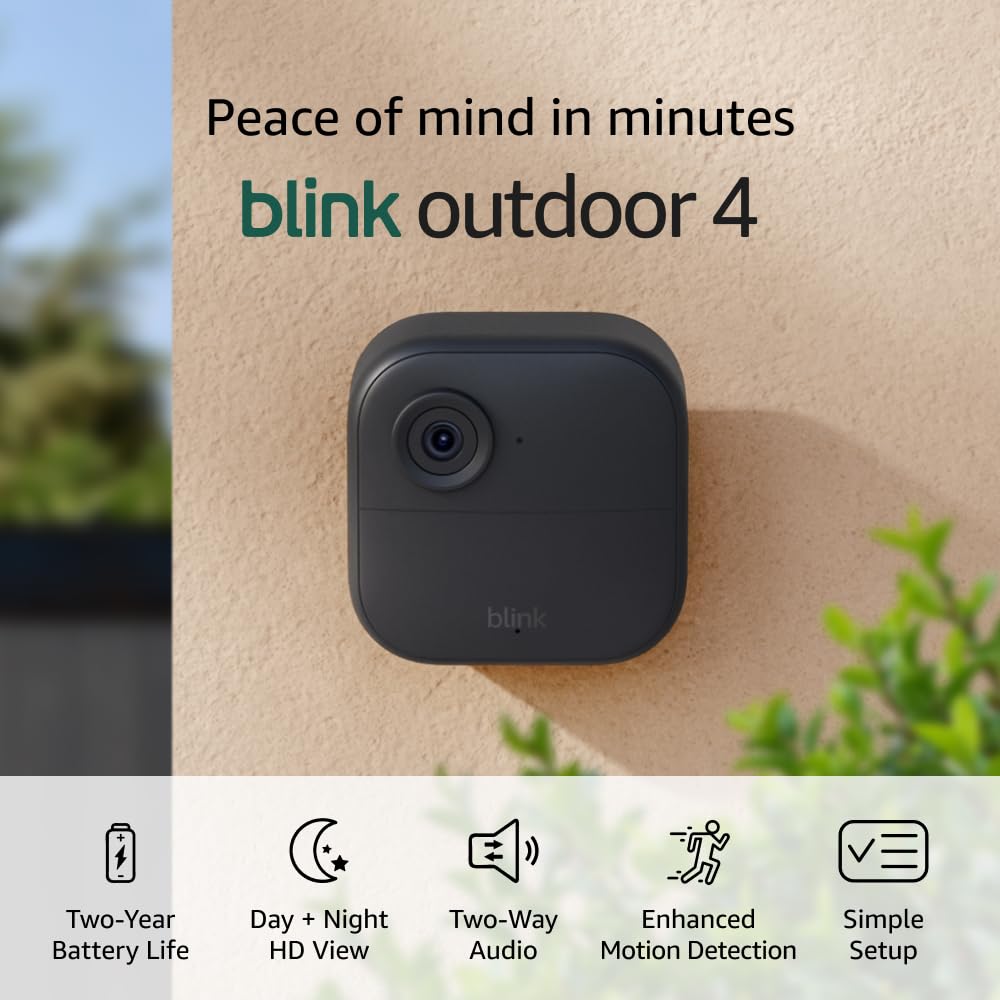
If you’ve been looking at Blink’s camera lineup lately, you’ve probably noticed the naming gets confusing fast. Blink is a brand owned by Amazon that makes battery-powered wireless security cameras — meaning they run on AA batteries and connect to your home Wi-Fi without any wiring required. That makes them appealing for renters, homeowners who don’t want to hire an electrician, and anyone who needs a camera on a garage wall or back fence post. The three current outdoor models — the Outdoor 4, the Outdoor 4 XR, and the Outdoor 2K+ — look similar in photos but are meaningfully different in the field. This article breaks down exactly what those differences are, where each camera earns its price, and which one makes sense for your specific setup. No fluff, no marketing copy — just the tradeoffs named plainly.
| EDITOR'S PICKBlink Outdoor 2K+ (newest model… | Mid-tierBlink Outdoor 4 – Wireless smar… | Budget pickBlink Outdoor 4 – Wireless smar… | |
|---|---|---|---|
| Resolution | 2K | 1080p HD | — |
| Sync Module | Included | Included | Not included |
| Night vision | — | Infrared | — |
| Two-way talk | — | ✓ | ✓ |
| Price | $156.99 | $44.99 | $23.99 |
| See on Amazon → | See on Amazon → | See on Amazon → |
What Actually Separates These Three Cameras
At a glance, all three cameras share the same core Blink DNA: battery-powered, weather-resistant, motion-triggered recording, and integration with Amazon Alexa. But the distinctions between them are real and worth naming before you buy a multi-pack.
Blink Outdoor 4: The Reliable Baseline
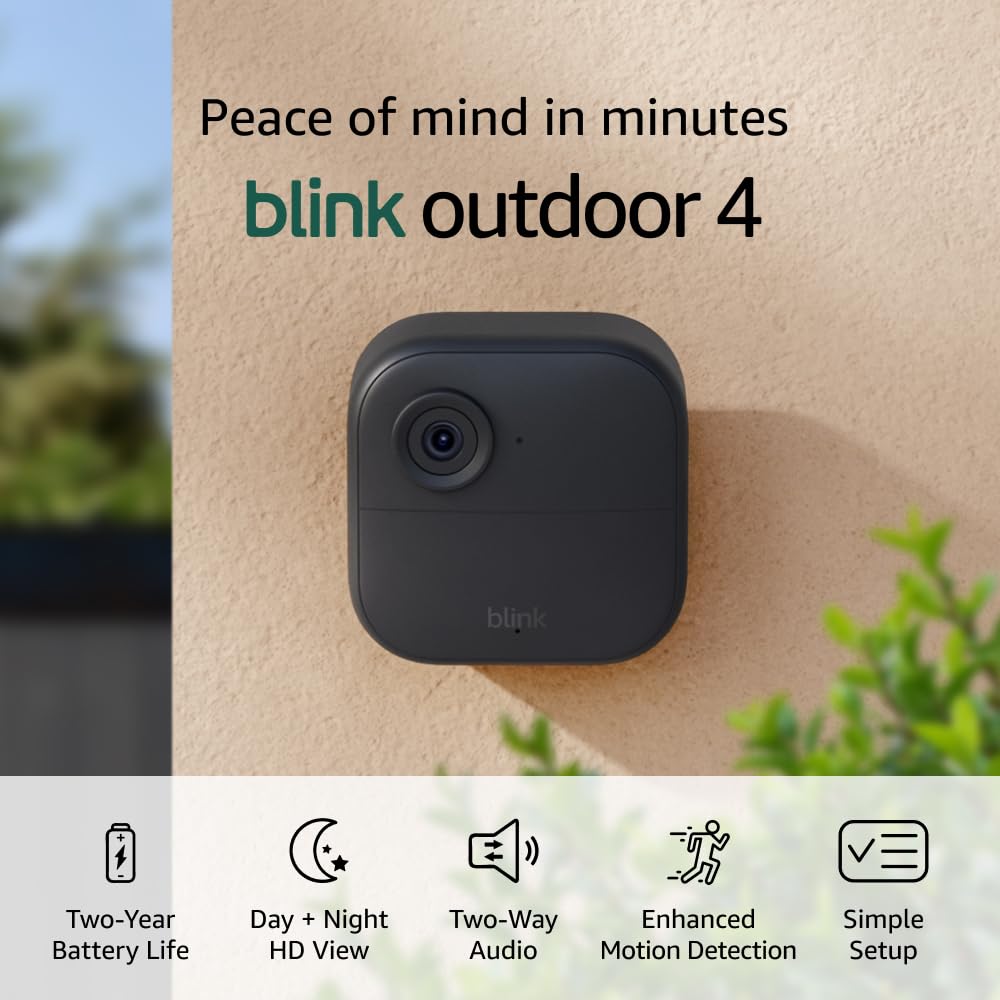
The Outdoor 4 is Blink’s current entry-level outdoor model. It records in 1080p HD, supports two-way audio, and includes Blink’s improved activity zone grid — a feature that lets you draw a custom detection boundary so the camera doesn’t trigger every time a car passes on the street. Owners across aggregated Amazon verified-purchase reviews consistently praise this zone grid as noticeably more granular than previous Blink generations, with more selectable squares to work with. The camera feels physically heftier than earlier Blink models, a point multiple reviewers raise unprompted. Molly McLaughlin’s 2024 review of the Outdoor 4 in PCMag (titled “Blink Outdoor 4 Review”) rates the build quality as a step up from the Outdoor 3 series, noting the improved housing construction.
For a homeowner who needs solid basic coverage — a front porch, a side gate, a garage — the Outdoor 4 is the sensible starting point without paying for resolution or range you don’t need.
Blink
$23.99
In stock on Amazon
Check price on AmazonBlink Outdoor 4 XR: Extended Range with Honest Caveats
The Outdoor 4 XR adds extended wireless range between the camera and the Sync Module (the small hub that connects your cameras to Wi-Fi and your phone). The published specification claims up to 1,000 feet of open-air range. Here’s where Amazon’s own product listing makes an important disclosure worth reading carefully: that 1,000-foot figure applies in ideal, unobstructed conditions. In typical residential use — through walls, around corners, across yards with trees or outbuildings — Amazon’s own product description notes the practical range drops to approximately 400 feet.
That’s still strong for a battery-powered wireless camera, but buyers who purchase the XR specifically for its range promise should know the real-world number going in. The resolution stays at 1080p and color night vision is not included, so the XR is a single-purpose upgrade: reach, not image quality.
If your property includes a detached garage, a barn, a pool house, or any outbuilding that sits at the edge of your standard Wi-Fi camera coverage, the XR solves a real problem — provided you approach that 400-foot practical figure as the planning number, not 1,000.
Blink
$44.99
In stock on Amazon
Check price on AmazonBlink Outdoor 2K+: Resolution and Color Night Vision for Demanding Setups
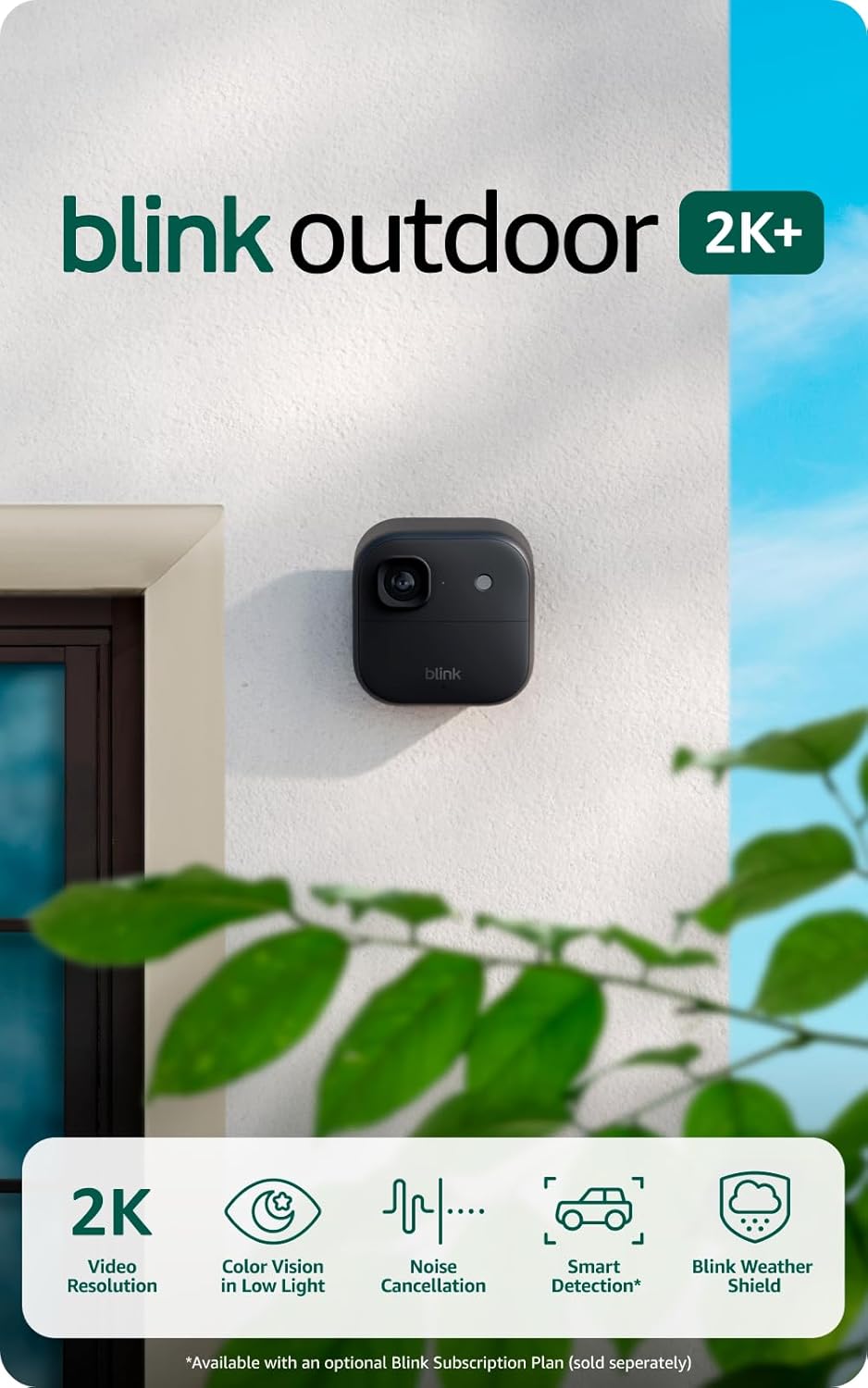
The Outdoor 2K+ steps up to 2K resolution (approximately 2560×1440 pixels, compared to 1080p’s 1920×1080) and adds color night vision along with compatibility with Blink’s floodlight mount accessory. Aggregated Amazon verified-purchase reviews from owners who upgraded from older Blink generations — including one owner who purchased fifteen cameras across three five-packs to replace a decade-old first-generation system — consistently describe the color night vision as a genuine, visible improvement rather than a marketing checkbox. Seeing footage in color at night changes how useful recordings actually are when something happens: clothing color, vehicle color, and facial detail all become legible in ways that black-and-white infrared footage does not provide.
At distances where you want to read a license plate or identify a face at 40 to 50 feet, the resolution jump matters. Tom’s Guide’s 2024 camera review coverage (which includes the Outdoor 4 series) notes that resolution improvements at this tier become most meaningful at longer capture distances and in low-light conditions where detail degradation compounds. For a driveway camera, a rental property entrance, or any situation where footage quality could matter in a dispute, the 2K+ earns its price premium.
Blink
$156.99
In stock on Amazon
Check price on AmazonThe Subscription Problem Nobody Puts in the Box
This is the most important section in this article. If you remember nothing else, remember this.
Blink cameras can store recordings in two ways: in the cloud via a paid subscription called the Blink Subscription Plan, or locally on a USB drive plugged into the Sync Module. The marketing for all three cameras leans heavily on “local storage available” as a reason you don’t need to pay monthly. That framing is technically accurate but practically misleading.
One verified Amazon purchaser of the Outdoor 2K+ describes what happens without a subscription: after losing their job and canceling the Blink plan, the cameras became — their exact words — “completely useless paperweights.” Local storage via the Sync Module does exist, but it requires the Sync Module 2 (not all older modules support it), requires a USB drive you supply yourself, and the Blink app’s clip review, sharing, and alert features are meaningfully degraded without an active plan. Reviewing local clips remotely is restricted; the system operates with one hand tied behind its back.
PCMag’s “Blink Outdoor 4 Review” (Molly McLaughlin, 2024) and Tom’s Guide’s 2024 Outdoor 4 camera coverage both identify the subscription dependency as a persistent critique of the Blink ecosystem. SafeWise’s “Best Wireless Security Cameras” guide (updated 2025) flags Blink’s subscription structure as a key consideration for budget-focused buyers who assumed local storage was a full replacement for the paid tier.
The honest framing: The subscription is $10 per month per camera or $100 per year for unlimited cameras on a single home. The math strongly favors the annual home plan if you have more than one camera. Build that cost into your total ownership calculation before comparing Blink to wired or NVR-based alternatives. For a five-camera system over three years, the annual plan adds $300 to your real cost — a number that should appear in any honest budget.
The Mounting Base Problem and How to Avoid It
Across owner reviews for all three Outdoor 4 variants, one complaint surfaces repeatedly and independently: the mounting base is fragile during assembly. Multiple verified purchasers report the base cracking or snapping during the initial installation step — not from a drop or weather exposure, but simply from applying normal torque while assembling it out of the box. One reviewer explicitly states they broke the first base before the camera was ever mounted.
The root cause appears to be tight tolerances at the plastic pivot joint. The fixes owners recommend:
- Do not overtighten. The base only needs to be snug enough to hold the camera’s angle — not torqued down hard.
- Pre-position the camera angle before final tightening. Adjusting the angle after the base is already tightened is where most snaps occur.
- Consider third-party mounting brackets. A small ecosystem of aftermarket Blink-compatible mounts exists that provide more adjustment range with less stress on the plastic joint.
This is not a dealbreaker, but it is a real enough pattern across enough independent reviews that it deserves a warning before your installation day.
Real-World Battery Life vs. the Two-Year Claim
All three cameras carry a manufacturer-rated battery life of up to two years on a pair of AA lithium batteries. In practice, owners consistently report a wide range depending on configuration and usage volume.
The two-year figure assumes the camera is triggered infrequently — roughly a handful of motion events per day — with clip length kept short and Live View used sparingly. Heavy-use scenarios look very different. Owners in high-traffic locations (front porches on busy streets, driveways with frequent deliveries, short-term rental properties with regular guest turnover) report battery replacement intervals as short as three to six months. Tom’s Guide’s 2024 outdoor camera coverage notes that Live View access represents a significant battery drain, and any Alexa routine that calls the camera feed regularly will compress battery life substantially.
The practical planning assumption: budget for lithium AA batteries as a recurring cost and purchase them in bulk. The cameras accept standard AA lithiums with no proprietary packs involved. For a five-camera system in a moderate-traffic yard, one full battery swap cycle per year across the system is a conservative but realistic baseline.
Frequently Asked Questions
Can I use Blink Outdoor cameras without a subscription at all?
Yes, with significant caveats. Without a subscription, cameras can save clips locally to a USB drive via the Sync Module 2. However, the clip review experience in the app is restricted, remote playback is limited, and features like video history browsing and sharing are tied to the paid plan. As verified owner accounts document after canceling subscriptions, practical usability drops sharply. The cameras still detect motion and can trigger alerts, but the recording and review workflow is meaningfully hampered.
Does a Blink add-on camera come with a Sync Module?
No. Add-on cameras in Blink’s lineup are sold without a Sync Module on the assumption you already own one. Each household needs at least one Sync Module 2 to operate the system. If you’re buying your first Blink camera, purchase a kit that includes the Sync Module. If you’re expanding an existing Blink system, the add-on pack is the right buy — but confirm your existing module is the Sync Module 2 if local storage matters to you.
What happens to recordings if the Sync Module goes offline?
Recordings stop. The Sync Module is the network bridge between cameras and both cloud and local storage. If it loses power or internet connectivity, cameras continue to detect motion but cannot save clips anywhere. This is a meaningful architectural limitation compared to NVR-based systems where cameras record directly to a hard drive regardless of internet status. For properties where continuous recording during outages matters — rental properties, vacation homes — an NVR-based system with local storage is worth evaluating against the Blink ecosystem’s convenience advantages. CNET’s 2025 coverage comparing Amazon’s security ecosystem (“Blink Outdoor 4 vs. Ring Alarm: Which Amazon Security Ecosystem Is Right for You?”) addresses this infrastructure dependency directly.
Is the 2K+ actually a meaningful upgrade over the Outdoor 4 for most yards?
For a typical residential yard at distances under 30 feet, the practical difference between 1080p and 2K is modest. At distances where you want to read a license plate or identify a face at 40 to 50 feet, the resolution jump matters and owners who have made this comparison notice it. The color night vision is the more universally appreciated upgrade; owners consistently report that seeing in color at night changes how useful footage is when something actually happens. If your use case involves longer distances or you’re replacing cameras on a property where image quality has previously cost you useful evidence, the 2K+ is worth the step up.
How does real-world battery life compare to the two-year claim?
The two-year claim applies to low-activity installations. Owners in moderate to high-traffic environments report six to twelve months as more realistic. Live View usage and Alexa integration are the two biggest battery accelerants. Budget for lithium AA batteries as an ongoing cost — for a five-camera system with average activity, one full swap cycle per year is a reasonable planning assumption.
The Decision Rule
Here’s the plain-language frame for where each camera earns its place:
Choose the Outdoor 4 if you’re building a basic yard camera system with reliable Wi-Fi coverage throughout your property and plan to subscribe to a monitoring plan. Solid build, improved detection zones, and no reason to pay for range or resolution you don’t need.
Choose the Outdoor 4 XR if you have a large property, a detached garage, a barn, or any structure that pushes the limits of standard wireless camera range. Go in knowing the 400-foot real-world figure is your planning number — not the 1,000-foot open-air marketing specification.
Choose the Outdoor 2K+ if you’re replacing an aging system, running cameras on a rental property where footage quality could matter in a dispute, or want color night vision as a genuine operational feature. The owner who purchased fifteen of them for a full property upgrade made a defensible decision.
If you’re planning to run this system without a subscription long-term: reconsider the entire Blink ecosystem before you commit to five or ten cameras. The local storage option exists, but the experience is designed around the paid plan. For truly subscription-free wireless camera operation, the competitive landscape looks different — and that comparison is worth doing before you’re locked in.
Total cost of ownership for a five-camera Blink system over three years: factor in the $100-per-year annual home subscription plan, one battery swap cycle per year across cameras, and potential Sync Module replacement if hardware fails outside warranty. That honest math — not the sticker price — is where the real comparison with alternative ecosystems lives.