August 26, 2026 • Kwame Osei-Bonsu • 11 min reading time • Prices verified June 18, 2026
Budget Smart Lock Showdown: eufy C210, C30, C33, and Veise for Renters and Landlords
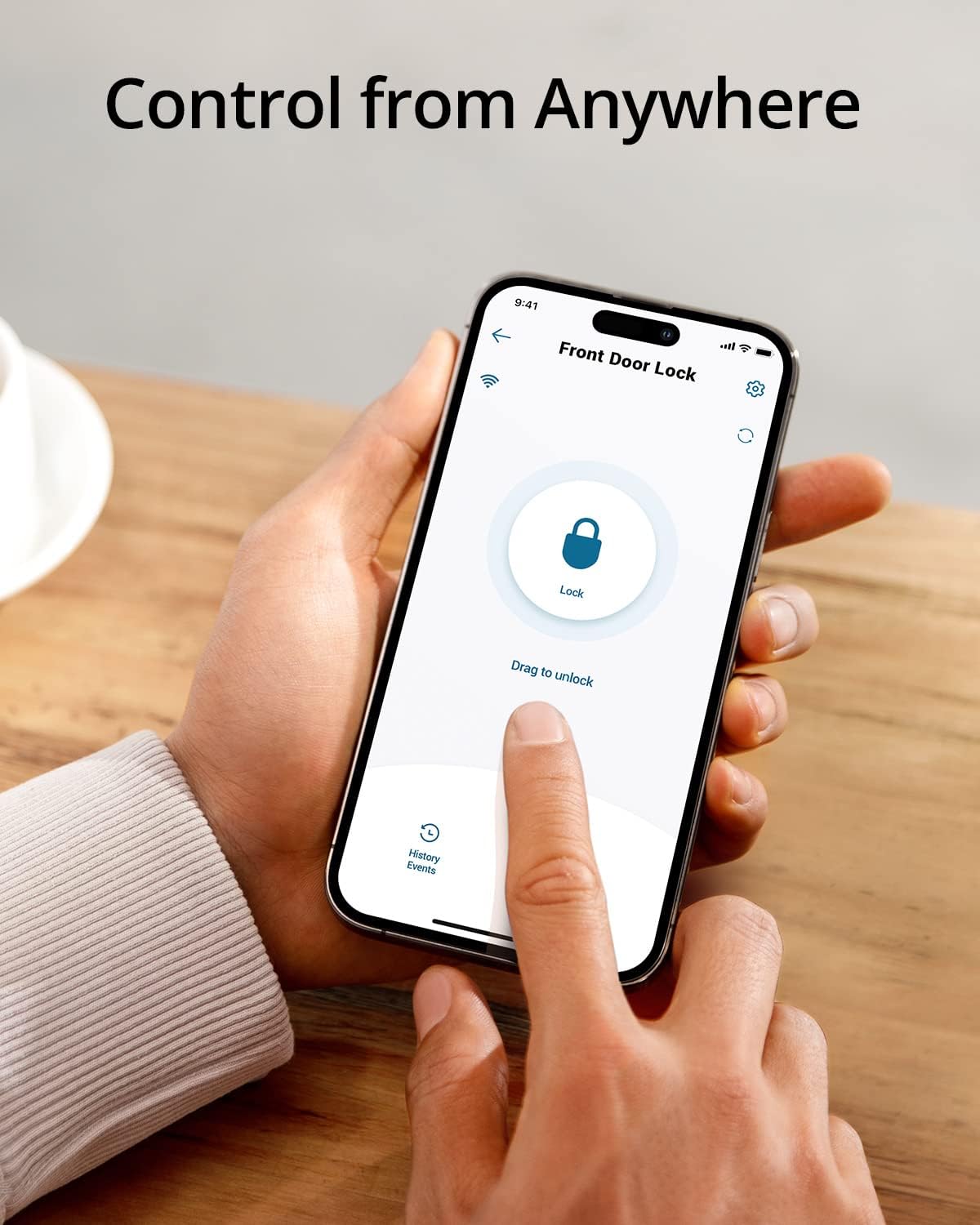
A smart lock replaces your traditional keyed deadbolt — or lever-style door handle — with a device you can unlock using a code, your fingerprint, a smartphone app, or all three at once. No physical key required, no locksmith visit every time a tenant moves out. For a landlord managing rental properties or a renter who wants convenient keyless entry without asking the building owner to rekey anything, that’s a genuinely useful upgrade. The catch is that smart locks range from budget-tier options under $80 all the way to professional-grade hardware pushing $300 or more — and the gap in real-world reliability is not always proportional to the price difference. This article breaks down four of the most-discussed budget options — the eufy C210, C30, C33, and the Veise smart lock — so you can make a clear-eyed call on which one fits your door, your use case, and your tolerance for trade-offs.
If you’ve landed here after a frustrating experience with a pricier lock — a Schlage that randomly stopped connecting, a Kwikset with a Z-Wave hub that went unsupported, a Yale that ate batteries — you’re not alone. Across owner reviews on major retail platforms and coverage in PCMag’s smart lock roundups and Tom’s Guide’s “Best Smart Locks” feature, a recurring theme in the eufy and Veise comment sections is exactly that: buyers who came down from a $200-plus lock and arrived at a $60–$80 replacement with low expectations and found themselves pleasantly surprised. That framing matters here, because these locks aren’t trying to out-spec a Schlage Encode. They’re trying to be reliable enough, convenient enough, and affordable enough to make sense at scale.
The Quick Decision Frame: Where Each Lock Actually Fits
Before diving into individual models, understand the structural difference between them:
- eufy C210 — Deadbolt replacement, Bluetooth plus keypad, no WiFi without the eufy HomeBase or a separate bridge.
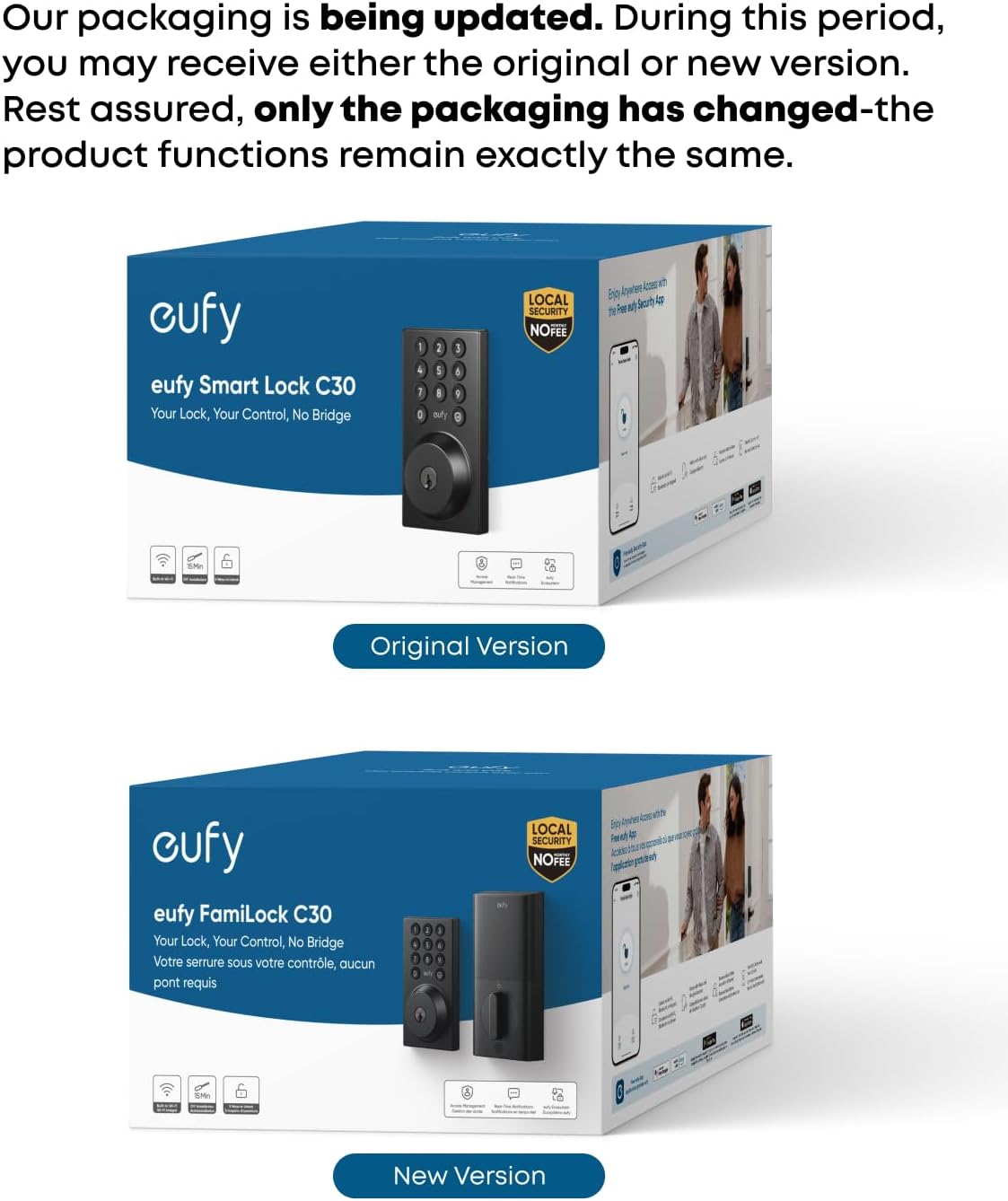
- eufy C30 — Deadbolt replacement, built-in WiFi (no bridge required), keypad plus fingerprint.
- eufy C33 — Lever handle replacement, fingerprint plus keypad, designed for doors that lack a deadbolt bore hole.
- Veise — Deadbolt replacement (in most configurations), WiFi or Bluetooth depending on model variant, keypad entry.
That lever-vs-deadbolt split is the most important first cut. If your rental door has a standard deadbolt hole — the round bore in the door edge, typically 2-1/8 inches in diameter — any of the deadbolt-format locks will fit without new drilling. If your door only has a lever-handle prep and no deadbolt, which is common in interior apartment doors, some older construction, and certain HOA properties, the C33 is the only one of this group that addresses that situation.
Feature Overview by Model
| Lock | Format | WiFi Without Bridge | Fingerprint | Battery Type | Subscription Required |
|---|---|---|---|---|---|
| eufy C210 | Deadbolt | No | No | 4×AA | None |
| eufy C30 | Deadbolt | Yes | Yes | 4×AA | None |
| eufy C33 | Lever handle | Yes | Yes | 4×AA | None |
| Veise | Deadbolt | Yes (most configs) | Yes (most configs) | 4×AA | None |
No subscription fees across all four. That’s a meaningful common denominator in a category where several major brands have moved core features behind monthly paywalls, a pattern documented in CNET’s “Best Smart Locks for 2025” coverage.
Individual Model Breakdowns
eufy C210: The Long-Haul Landlord Workhorse
The C210 is the simplest lock in the eufy lineup and, arguably, the most durable in day-to-day use because it keeps the feature set lean. It’s a deadbolt-format lock with a keypad and Bluetooth connectivity. There is no built-in WiFi, which means remote access requires the eufy HomeBase or a compatible bridge — an added cost and an added point of failure to consider in your total setup math.
Where owners consistently report satisfaction is in finish longevity. Across long-run owner reviews aggregated over extended periods, the C210’s exterior finish holds up well under repeated daily use — a detail that matters on rental properties where cosmetic degradation accelerates handoff costs. One landlord scenario that surfaces repeatedly in community discussions: a property owner managing multiple units across different addresses reports being able to rotate access codes between tenant turnovers entirely from a smartphone, without touching the lock. That’s the core value proposition of the C210 for multi-property operators — not cutting-edge features, but dependable code management at distance.
The trade-off you need to price in: if remote access is essential and you don’t already own a eufy HomeBase, you’re adding cost and a hub dependency. For a single property where someone is usually on-site, that’s manageable. For a portfolio operator who wants pure app-based management from out of state with no additional hardware, the C30 or Veise may clear the bar more cleanly.
eufy
$79.99
In stock on Amazon
Check price on Amazoneufy C30: WiFi Simplicity With a Real Battery Warning
The C30 solves the bridge problem by building WiFi directly into the lock. You pair it to your home or property’s WiFi network during setup, and from that point forward you can manage codes, check lock history, and lock or unlock remotely without any hub. For landlords and short-term rental operators who want turnkey remote management without additional hardware, that’s a legitimate upgrade over the C210.
Here’s where you need to pay close attention: property managers installing the C30 on high-traffic rental doors specifically report significant battery drain with the 4×AA cell configuration. This is the most operationally significant complaint in this entire product set. A lock on a primary rental entry door — think a short-term rental with multiple guest check-ins weekly, or a multi-unit building’s common vestibule — can burn through a set of AA batteries in weeks rather than the months a typical single-family homeowner would experience. That’s not a defect; it’s physics. WiFi radio draws more power than Bluetooth, and every unlock event consumes a draw. High-traffic doors amplify both variables.
The mitigation is straightforward but adds cost: use lithium AA batteries rather than alkaline for dramatically extended life in high-drain applications. This recommendation is consistent with guidance in Tom’s Guide’s “Best Smart Locks in 2025” battery optimization notes for WiFi-native locks. Budget for quarterly battery checks at minimum on heavy-use properties, and build that into your operating cost model if you’re evaluating the C30 at scale.
CNET’s “Best Smart Locks for 2025” coverage notes that WiFi-native locks as a category trade remote convenience for higher power consumption — the C30 is not unusual here, but the complaint volume from rental-context users is high enough to warrant a clear flag. If your property has low-to-moderate traffic, the C30’s battery performance will likely be unremarkable. If it’s a short-term rental with five guest rotations a week, plan accordingly.
eufy
$89.99
In stock on Amazon
Check price on Amazoneufy C33: The Gap-Filler That Actually Works
The C33 earns its place in this comparison by solving a problem the other three ignore entirely: what do you do when the door has no deadbolt bore? Lever-format smart locks are genuinely underserved in the sub-$100 tier, and the C33 is one of the few options in this price range that isn’t obviously flimsy.
Reviewers consistently note that build quality feels more substantial than expected given the price point — a common finding for buyers who have handled cheap lever-format locks at big-box stores. The lock integrates fingerprint, keypad, and app access in the lever format, which is a meaningful capability stack for interior security doors, secondary entrances, and properties where door prep doesn’t accommodate a standard deadbolt installation.
One calibration note from aggregated owner feedback: fingerprint recognition on the C33 is angle-sensitive. Specifically, users report better read reliability when the finger is presented straight-on to the sensor rather than at a slight lateral angle. This sounds minor until you picture a tenant loading grocery bags who reaches for the lock from the side. It’s worth communicating to tenants or household members at setup time: center your finger on the reader rather than approaching from an angle. SafeWise’s “Best Smart Locks: Expert Tested and Reviewed” notes that sensor geometry inconsistency is a known limitation across budget-tier fingerprint readers generally, and it tends to be more pronounced on lever-format locks where the natural approach angle varies more than on a vertical deadbolt keypad.
For landlords with properties that have lever-only door prep, the C33 is the clear answer in this comparison. There is no real alternative at this price that clears the build quality bar.
eufy
$79.99
In stock on Amazon
Check price on AmazonVeise: The Customer Support Differentiator
Veise is a smaller brand with less editorial review coverage than eufy, but it appears prominently in owner discussions for a reason that’s unusual in this product category: named, responsive customer support. Across aggregated owner feedback, Veise buyers who encountered setup issues or early hardware problems report actually reaching a helpful human, sometimes the same representative across multiple contacts. In a category dominated by support experiences that range from frustrating to nonexistent, this is a genuine differentiator.
From a hardware standpoint, Veise deadbolt configurations offer WiFi connectivity in most current model variants, keypad entry, and fingerprint access at a price point competitive with the eufy C30. Published specs and owner-reported installation experiences suggest standard door prep compatibility with no additional drilling required in typical applications.
Security.org’s “Smart Lock Statistics and Data” identifies support experience as a top-three factor in long-term owner satisfaction — ranked above feature count and below overall reliability. For a landlord managing properties remotely, knowing you can actually reach someone when a lock acts up before a guest check-in is worth pricing into your decision. Eufy’s support infrastructure is larger but less consistently praised in rental-context reviews. Veise’s support reputation is smaller-scale but notably warmer in the owner feedback record.
The honest caveat: Veise has less third-party editorial review depth than eufy. PCMag’s “The Best Smart Locks for 2025” and Tom’s Guide’s “Best Smart Locks in 2025” cover eufy’s lineup with more specificity than Veise. If deep editorial vetting matters to your purchase confidence, that gap is real.
eufy
$89.99
In stock on Amazon
Check price on AmazonFrequently Asked Questions
Do any of these locks require a separate hub or bridge to work with WiFi? Yes — the eufy C210 requires a eufy HomeBase or compatible bridge for WiFi and remote access. The C30, C33, and Veise in WiFi-configured models connect directly to your property’s WiFi network without additional hardware. This is a meaningful cost and complexity difference for multi-property operators.
How often will I need to replace batteries, and does usage frequency matter? Usage frequency matters significantly. In a typical single-household low-traffic installation, owners report 6–12 months of battery life from a set of AA cells. In high-traffic rental applications — multiple daily unlock events, frequent code changes, active WiFi radios — property managers report substantially shorter intervals, sometimes 6–10 weeks. Lithium AA batteries outperform alkaline in high-drain smart lock applications and are the recommended choice for rental-context deployments.
Can I manage multiple locks across different properties from one app? Yes — eufy’s app supports multiple devices across multiple locations under a single account. Landlords managing geographically distributed properties can add each lock to the same app and manage codes, access logs, and lock status per property. Veise’s app supports multi-lock management, though the interface depth for portfolio management is less documented in third-party reviews.
What happens if the app goes offline — can I still get in? All four locks retain local functionality. Keypad code entry works regardless of app or WiFi status. Fingerprint access on the C30, C33, and Veise also operates locally. You lose remote management capability when connectivity drops, but physical access for anyone who knows a valid code is unaffected. Never install a lock that requires cloud connectivity for local entry.
Will these locks fit my existing door prep without drilling new holes? The C210, C30, and Veise in deadbolt format fit standard US deadbolt door prep: a 2-1/8-inch cross-bore and a 1-inch edge-bore in most configurations. The C33 replaces a lever handle rather than a deadbolt. Verify your door’s backset measurement — the distance from the door edge to the center of the bore hole, typically 2-3/8 inches or 2-3/4 inches — before ordering, as most locks in this tier accommodate both, but confirm in the product specs.
Which of these locks works with Alexa or Google Home? The eufy C30 and C33 support Amazon Alexa and Google Home integration through the eufy Security app. The C210’s smart home integration is more limited without a bridge or HomeBase. Veise’s smart home assistant compatibility varies by model variant — check the specific product listing for Alexa or Google Home certification before purchasing if voice control is a requirement.
The Decision Rule
If your door has no deadbolt bore: eufy C33, with no close second in this tier.
If you’re managing a high-traffic short-term rental and want WiFi without a hub: eufy C30, but budget for lithium batteries and quarterly checks — factor that into your operating cost honestly.
If you want a long-run, low-drama deadbolt for a stable long-term rental and already have or plan to get a eufy HomeBase: eufy C210 earns the durability reputation.
If responsive human support is a decision factor and you’re willing to trade some editorial review depth for it: Veise is worth serious consideration, particularly for operators who have been burned by support black holes at larger brands.
None of these locks is a forever-lock at a forever-property. They’re right-sized tools for a specific budget tier and use case. Know which problem you’re actually solving, match the hardware to it, and you’ll come out ahead of where you were with that $200 lock that stopped pairing last winter.