June 21, 2026 • Kwame Osei-Bonsu • 10 min reading time • Prices verified June 18, 2026
Motion Sensor Lighting Inside Your Home: Lutron, Sengled Bulbs, and the Right Trigger for Every Room
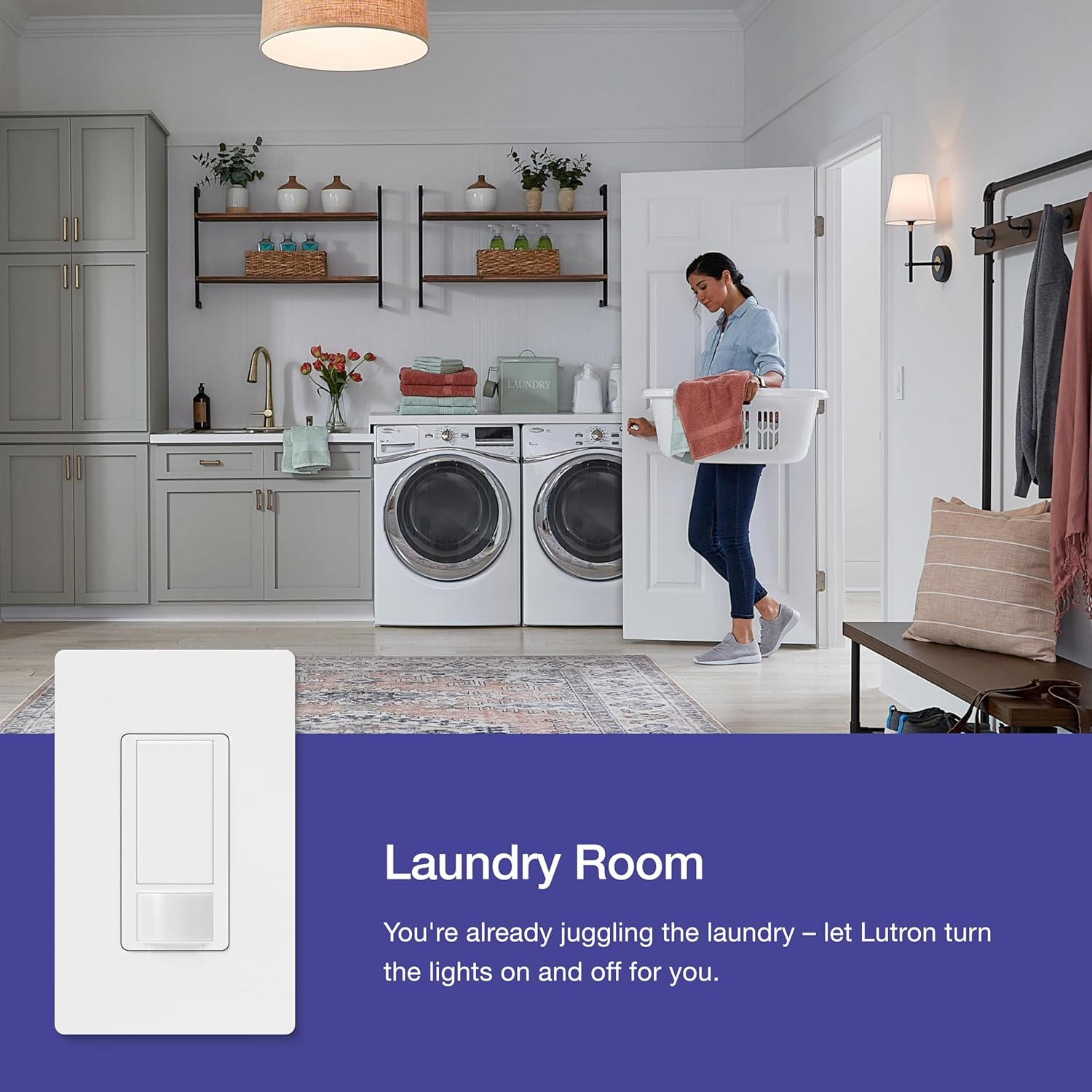
Motion-sensor lighting is exactly what the name suggests: lights that turn on automatically when they detect movement and turn off when the room goes still. The sensor is usually built into a wall switch — replacing the standard toggle switch you already have — or embedded inside a smart light bulb itself. Either approach removes the “did I leave the basement light on?” anxiety and, more relevantly for security-minded readers, removes the predictable on/off patterns that signal an empty house. This guide focuses specifically on indoor motion lighting, the two product families most consistently recommended by owners and reviewers at this budget tier — the Lutron Maestro sensor switch and the Sengled motion/dusk-to-dawn smart bulb — and the decision logic for matching each option to the right room.
If you’re already sold on the concept and just need to know which product fits where and why the modes are confusing, skip ahead to the room-by-room section. If you’re still working out whether a switch-swap or a bulb-swap is the right move, start at the top.
| EDITOR'S PICK[Lutron Maestro Motion Sensor Li…](https://www.amazon.com/dp/B005WM3ALC?tag=greenflower20-20) | Budget pick[Sengled Motion Sensor LED Bulbs](https://www.amazon.com/dp/B0GGBHZ7YY?tag=greenflower20-20) | |
|---|---|---|
| Type | Switch | Bulb |
| Wattage | — | 11W |
| Brightness | — | 1200 lm |
| Color Temp | — | 5000K |
| Indoor/Outdoor | — | ✓ |
| Compatibility | Any Bulbs | — |
| Price | $39.98 | $12.56 |
| See on Amazon → | See on Amazon → |
Switch vs. Bulb: The Core Architecture Decision
The first fork in the road is whether you replace the switch or the bulb. These aren’t interchangeable solutions — they have meaningfully different installation profiles, ecosystem implications, and long-term costs.
Switch replacement (Lutron Maestro approach): You swap the wall switch for a sensor-equipped unit. The bulb in the fixture becomes irrelevant to the sensing logic — it’s just a bulb. This means you can use any bulb, including dumb LED bulbs that cost $2 each and last ten years. The intelligence lives in the wall. Owners consistently report that the Lutron Maestro feels permanent and deliberate — it looks like a standard Lutron switch, which is to say it looks like a quality piece of hardware, not an afterthought. The Wirecutter’s updated 2025 roundup of smart light switches calls out Lutron’s build quality as a consistent differentiator in the mid-range switch category.
The installation requires turning off the circuit breaker, removing the old switch, and wiring the new one in. For most single-pole locations (one switch controlling one fixture), this is a 20-minute job. The 3-way version — for locations like stairways where two switches control the same light — exists and installs similarly, but requires a little more planning (more on this in the FAQ).
Bulb replacement (Sengled approach): You leave the switch alone and screw in a new bulb. The sensor and any wireless logic live inside the bulb itself. This is the right move for renters who can’t modify wall switches, for fixtures in odd locations where running new wiring would be difficult, or for quick deployment across multiple rooms without any electrical work. Sengled’s motion and dusk-to-dawn bulbs are notable specifically because they operate independently — no hub required, no app required — which is a meaningful distinction in a market where most “smart” bulbs require a bridge or a subscription to do anything useful. Aggregated owner reviews confirm the hub-free operation: one reviewer explicitly described running a Sengled dusk-to-dawn bulb on the same porch as a Wyze smart bulb, with the Sengled functioning completely independently.
The tradeoff: if someone flips the wall switch off, the bulb loses power and its sensor is dead until the switch is flipped back on. This is a known limitation of all smart bulbs, not a Sengled-specific flaw.
The Lutron Maestro Modes: Occupancy vs. Vacancy (This Distinction Matters)
This is the single most common point of confusion among buyers, and it’s worth spending real time on it because choosing the wrong mode is why some owners find motion switches annoying.
Occupancy mode means the switch is fully automatic in both directions: it turns on when you enter the room and turns off after a set timeout when motion stops. You never touch the switch manually. This is ideal for rooms where you always want the light on when you’re present — laundry rooms, utility closets, garages, bathrooms.
Vacancy mode means the switch is manual on, automatic off: you still flip it on when you enter, but it turns off automatically after the timeout when you leave. You never have to remember to turn it off. This mode is preferred in rooms where you don’t always want the light to come on automatically — bedrooms, home offices, living rooms where you might be sitting still watching a movie. In vacancy mode, the sensor prevents you from leaving a light on, but respects your decision about when to turn it on.
Owners consistently flag this distinction as underexplained in the product packaging. CNET’s 2025 breakdown of motion sensor switches specifically notes that vacancy mode is often the right choice for living spaces but that most buyers default to occupancy mode without considering the behavioral difference. The Lutron Maestro supports both, and switching between them is typically a matter of holding the button for a few seconds — no tools required.
Room-by-Room Decision Framework
Here’s how to map the options to specific rooms with the tradeoffs named explicitly.
Laundry room / utility closet / basement: This is the Lutron Maestro’s natural habitat. Occupancy mode is correct here. You walk in with your hands full, the light comes on, it turns off when you leave. Owners in aggregated reviews mention laundry rooms and entryways more than any other location. The install investment pays off immediately because these are rooms where forgetting to turn off the light is a daily occurrence.
Stairways: The Lutron Maestro 3-way version solves a problem many buyers don’t know has a solution. Standard motion switches only work on single-pole circuits (one switch location). The 3-way Maestro allows the same automatic on/off behavior on a stairway where you have switches at the top and bottom. Reviewers who’ve installed it on stairways consistently rate it well. If you’re dealing with a stairway, confirm the 3-way model at purchase — the single-pole version will not work here.
Entryway / mudroom: Either the Maestro switch (occupancy mode) or a Sengled motion bulb works here. The switch is better long-term. The bulb is better if you’re renting or want zero electrical work.
Bedroom: Vacancy mode on the Maestro if you go the switch route. You do not want a sensor turning the lights on every time you roll over at 3am. Alternatively, skip motion sensing entirely in bedrooms and use scheduled smart bulbs. Motion lighting in bedrooms is the most commonly reported “I regret this” install in owner reviews — calibrate the timeout and mode carefully if you proceed.
Outdoor-adjacent fixtures / porches (interior-facing): The Sengled dusk-to-dawn bulb addresses a slightly different use case — it responds to ambient light levels rather than motion, turning on at dusk and off at dawn. This is less a security trigger and more a “porch light that manages itself” solution. Owners report an important quirk: the first several days after installation, the bulb is calibrating its threshold for what counts as “dark enough.” Initial behavior can feel erratic — turning on too early, or staying on too long into the morning. Owner reviews confirm this is a known calibration period and that behavior stabilizes within a few days to a week. Tom’s Guide’s 2025 smart bulb roundup flags this learning curve as a characteristic of photosensor-based bulbs broadly, not a defect specific to Sengled.
By the Numbers
| Product | Install Type | Hub Required | Mode Logic | Estimated Switch Cost (2026) |
|---|---|---|---|---|
| Lutron Maestro (single-pole) | Switch swap, requires breaker off | None | Occupancy or Vacancy | ~$35–$55 |
| Lutron Maestro (3-way) | Switch swap, requires breaker off | None | Occupancy or Vacancy | ~$45–$65 |
| Sengled Motion Bulb | Screw-in, no wiring | None | Motion-triggered | ~$12–$20 per bulb |
| Sengled Dusk-to-Dawn Bulb | Screw-in, no wiring | None | Photosensor (ambient light) | ~$10–$18 per bulb |
Reviewer price-sensitivity note: Lutron Maestro switches regularly appear at meaningful discounts during holiday sales events. Buyers tracking the single-pole model have reported drops from the $50+ range to closer to $35 during promotional windows. If the price is the hesitation, waiting for a sale is a documented and reasonable strategy.
Decision Rules
If you own the home and plan to stay more than two years, install the Lutron Maestro switch. The per-fixture cost is higher upfront, but you’re not locked into a specific bulb and the hardware will outlast multiple bulb generations.
If you’re renting, deploying across a property you don’t occupy, or want zero electrical work, use the Sengled bulb solution. Hub-free operation and standard screw-in form factor make it the fastest path to automated lighting with no modification to the unit.
If the location has two switch points (stairways, long hallways), verify you’re ordering the 3-way Maestro before purchasing — the single-pole model physically cannot be used in that configuration.
If the goal is “light that’s always on at night” rather than motion response, the Sengled dusk-to-dawn bulb is the right tool and the Maestro switch is the wrong one. These solve different problems.
Frequently Asked Questions
What is the difference between occupancy mode and vacancy mode on the Lutron Maestro switch? Occupancy mode is fully automatic: the light turns on when you enter and off when you leave. Vacancy mode is manual-on, automatic-off: you turn it on yourself, but it turns off on its own when motion stops. Use occupancy mode for utility rooms and bathrooms; use vacancy mode for living spaces and bedrooms where you don’t want the light triggering automatically.
Will the Sengled motion bulb work without any smart home hub or app? Yes. Sengled’s motion-sensor and dusk-to-dawn bulbs are designed to operate completely independently. No hub, no bridge, no app, no Wi-Fi required. Owner reviews confirm standalone operation, including use alongside other smart bulbs on the same fixture without interference.
How long does it take for the Sengled dusk-to-dawn bulb to learn the correct on and off times? Owner reports consistently describe a calibration period of several days — commonly three to seven — before the photosensor stabilizes its threshold for ambient light. During this period the bulb may turn on earlier or later than expected. This is normal behavior and resolves on its own. Apartment Therapy’s coverage of rental-friendly lighting notes this calibration window is characteristic of photosensor bulbs generally.
Can I install a Lutron Maestro switch in a rental apartment and take it with me when I move? Yes, with a caveat. The switch itself is removable — you simply reinstall the original switch when you move out. Keep the original switch in a labeled bag so you can swap it back. Some leases restrict any electrical modifications; check yours before proceeding. The installation leaves no permanent alteration to the wiring.
Does the Lutron Maestro work with LED bulbs or only incandescent? The Maestro is compatible with LED bulbs, and Lutron’s published product documentation specifically addresses LED compatibility. Some older dimmers in the Lutron line require a minimum load or neutral wire that affects LED performance, but the Maestro occupancy switch is designed for modern LED loads. Check the specific model’s spec sheet for minimum wattage requirements if you’re using very low-wattage LED bulbs.
Is there a 3-way version of the Lutron Maestro for stairways with switches at both ends? Yes. Lutron makes a multi-location / 3-way version of the Maestro specifically for circuits controlled from two switch points. Owner reviews confirm it works correctly on stairways. It is a separate SKU from the single-pole model — confirm you’re ordering the correct version before purchase, as the single-pole unit cannot be used in a 3-way configuration.