June 29, 2026 • Kwame Osei-Bonsu • 11 min reading time • Prices verified June 18, 2026
Ring Alarm vs. SimpliSafe vs. eufy: Which DIY Kit Actually Delivers at Each Price Point
If you’ve ever stood in the home-security aisle — physical or digital — and felt paralyzed by three nearly identical-sounding boxes, you’re not alone. A DIY home security kit is a bundle of sensors, a central hub (the “brain” of the system), and sometimes a siren that you install yourself without a technician. The appeal is obvious: no installation fee, no multi-year service contract forced on you at signing, and full control over how much or how little monitoring you pay for each month. The catch is that “DIY” covers an enormous range of experience levels and long-term commitments, and the wrong choice at the start can mean paying for features you’ll never use — or discovering a paywalled surprise buried in the Terms of Service. This article breaks down three systems that consistently dominate buyer conversations in 2026 — Ring Alarm, SimpliSafe, and eufy Security — across setup experience, monitoring economics, siren performance, expansion costs, and the honest trade-offs most reviews gloss over.
The Monitoring Fee Decision Is the Real Purchase Decision
Before comparing hardware, get this frame locked in: for Ring and SimpliSafe, the physical kit is essentially a discounted entry point into a subscription relationship. For eufy, it is not. That single distinction drives almost every other difference in how these systems behave over time.
Ring Alarm offers a base tier called Ring Protect Basic and a higher plan called Ring Protect Plus, which bundles cellular backup and extended warranties. According to Security.org’s Home Security Systems Cost Guide, professional monitoring through Ring runs roughly $10–$20 per month depending on the plan tier and whether cellular backup is included. The hardware functions without any subscription — you’ll still receive alerts on your phone — but key features like cloud video history, 24/7 professional dispatch, and cellular failover only activate with a paid plan.
SimpliSafe structures its monitoring similarly. A self-monitoring tier exists but it is intentionally limited: you receive app alerts but cannot dispatch police or fire through the SimpliSafe network without their Standard or Fast Protect plan. Tom’s Guide’s SimpliSafe Home Security Review notes that the Fast Protect tier — their top plan, featuring live video verification before dispatch — runs around $29.99 per month, a meaningful recurring cost when modeled across a five-year window.
eufy Security, by contrast, was built from day one for owners who refuse to pay a monthly fee indefinitely. Local storage via a HomeBase hub is included at no ongoing cost. CNET’s eufy Security Review consistently highlights this as eufy’s defining competitive advantage: the no-subscription architecture is structural, not a promotional tier that can be removed at a future pricing revision.
By the Numbers: 3-Year Monitoring Cost Comparison
| System | Hardware (mid-tier kit) | Monitoring (3 yr, mid plan) | 3-Year Total |
|---|---|---|---|
| Ring Alarm (8-piece) | ~$200 | ~$360 ($10/mo) | ~$560 |
| SimpliSafe (8-piece) | ~$250 | ~$720 ($20/mo Fast Protect) | ~$970 |
| eufy Security (5-piece) | ~$150 | $0 | ~$150 |
Figures are illustrative estimates based on published kit and plan pricing as of May 2026. Actual costs vary by promotions, bundle changes, and local taxes.
Setup Experience, Privacy Trade-offs, and Siren Performance
Understanding how each system installs — and what you’re agreeing to when you create an account — is as important as knowing the hardware specs. A system that sits in a box because installation felt overwhelming is worth exactly nothing.
eufy Security: Best for Renters and Fee-Averse Buyers
eufy’s 5-piece starter kit uses tape-mount installation throughout. No drilling is required, which owners confirm holds reliably across seasonal temperature changes — making it particularly suited to renters who cannot make permanent wall modifications. The HomeBase hub connects via ethernet rather than Wi-Fi for its core functions, which improves reliability in environments with congested wireless networks. Setup is straightforward: HomeBase configuration and camera pairing add a few steps compared to the most streamlined competitors, but CNET’s eufy Security Review rates the experience as beginner-accessible and specifically notes that the absence of subscription upsell pressure during onboarding is a point of difference many reviewers found refreshing.
On privacy architecture, eufy stores video locally on the HomeBase by default. This is structurally different from cloud-first storage systems and eliminates the data-retention and law enforcement access questions that govern cloud-stored footage. It is worth noting that eufy experienced a cloud privacy incident in 2023 related to thumbnail images briefly accessible via external URLs; the company addressed this through firmware updates and policy changes. CNET’s eufy Security Review covers this remediation. Buyers should review the current privacy policy to confirm the current posture before purchasing.
Ring
$119.99
In stock on Amazon
Check price on AmazonRing Alarm: Best Full-Ecosystem Integration
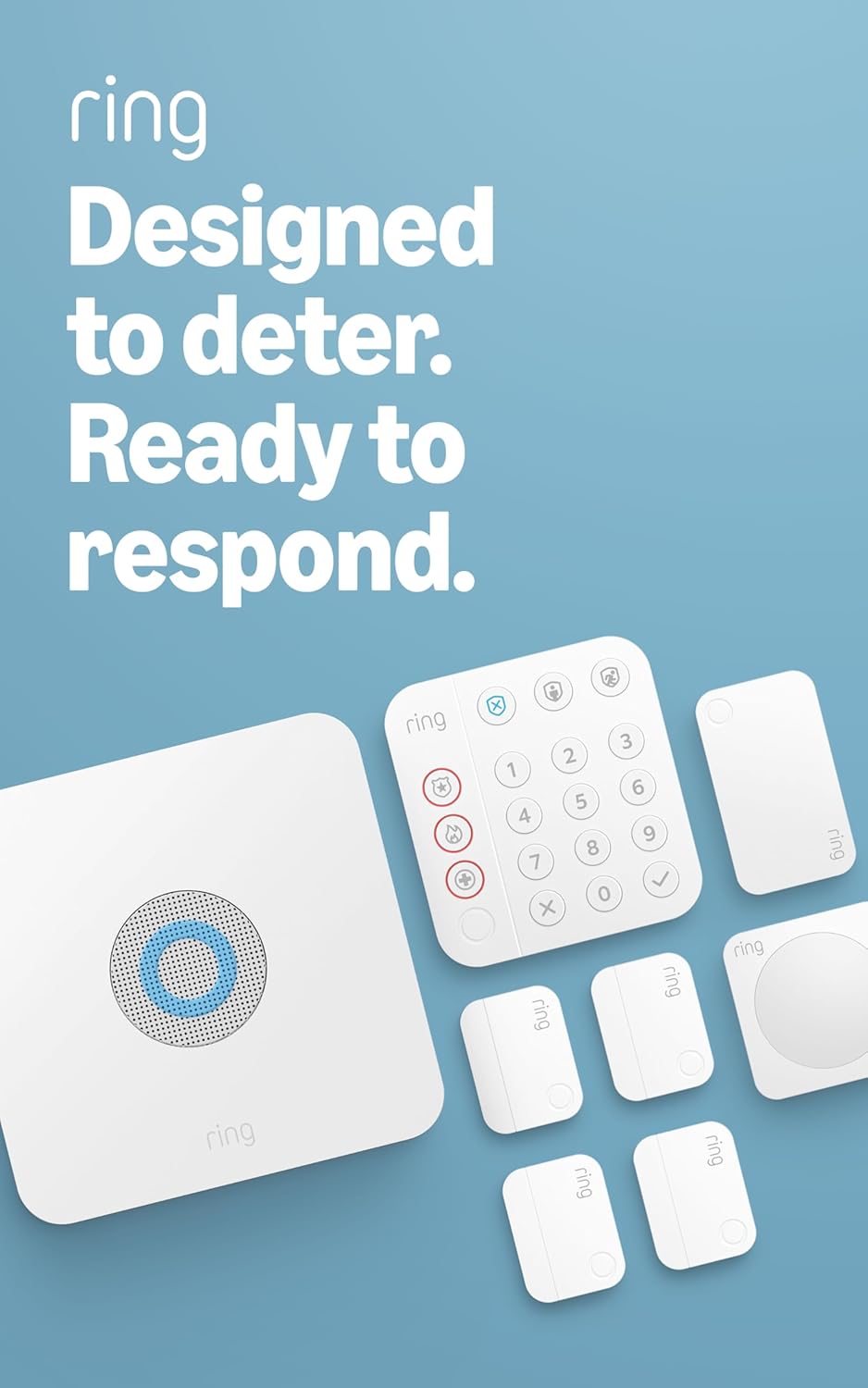
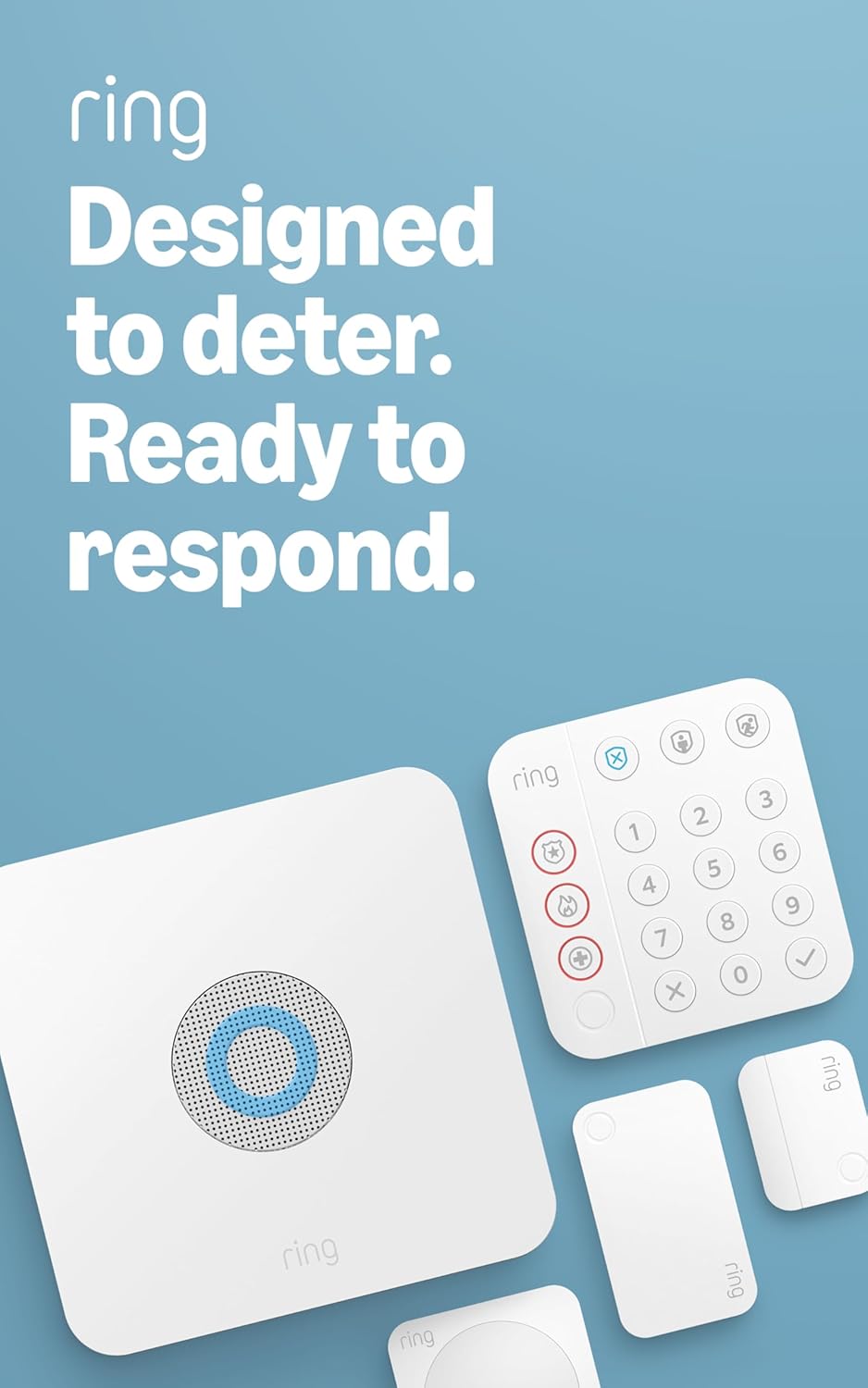
Ring Alarm has one of the most praised unboxing-to-armed experiences of any consumer security system. Sensors in the 8-piece and 14-piece kits arrive pre-synced to the base station, so buyers are not cycling through QR code scans for every component individually. PCMag’s Ring Alarm Pro Review rates the setup experience as among the smoothest in the DIY category and identifies the ecosystem breadth — cameras, video doorbells, smart lighting, and sensors all managed through a single app — as a top-line competitive advantage.
The Ring Alarm base station siren is rated at 104 dB. For context, that is approximately the volume of a chainsaw at close range, which is sufficient to be audible from outside a typical residential structure.
One flag buyers should not skip: Ring’s Terms and Conditions include provisions about law enforcement data-sharing and footage request policies that take effect at account creation, not at the point of physical setup. SafeWise’s Best Home Security Systems 2026 overview specifically notes that buyers should review Ring’s privacy policy before committing, because features connected to the Neighbors community video-sharing app are opt-out rather than opt-in by default, and those preferences are located in account settings rather than surfaced during the installation flow.
Ring
$149.99
In stock on Amazon
Check price on AmazonSimpliSafe: Best for Non-Technical Users Who Want Professional Monitoring
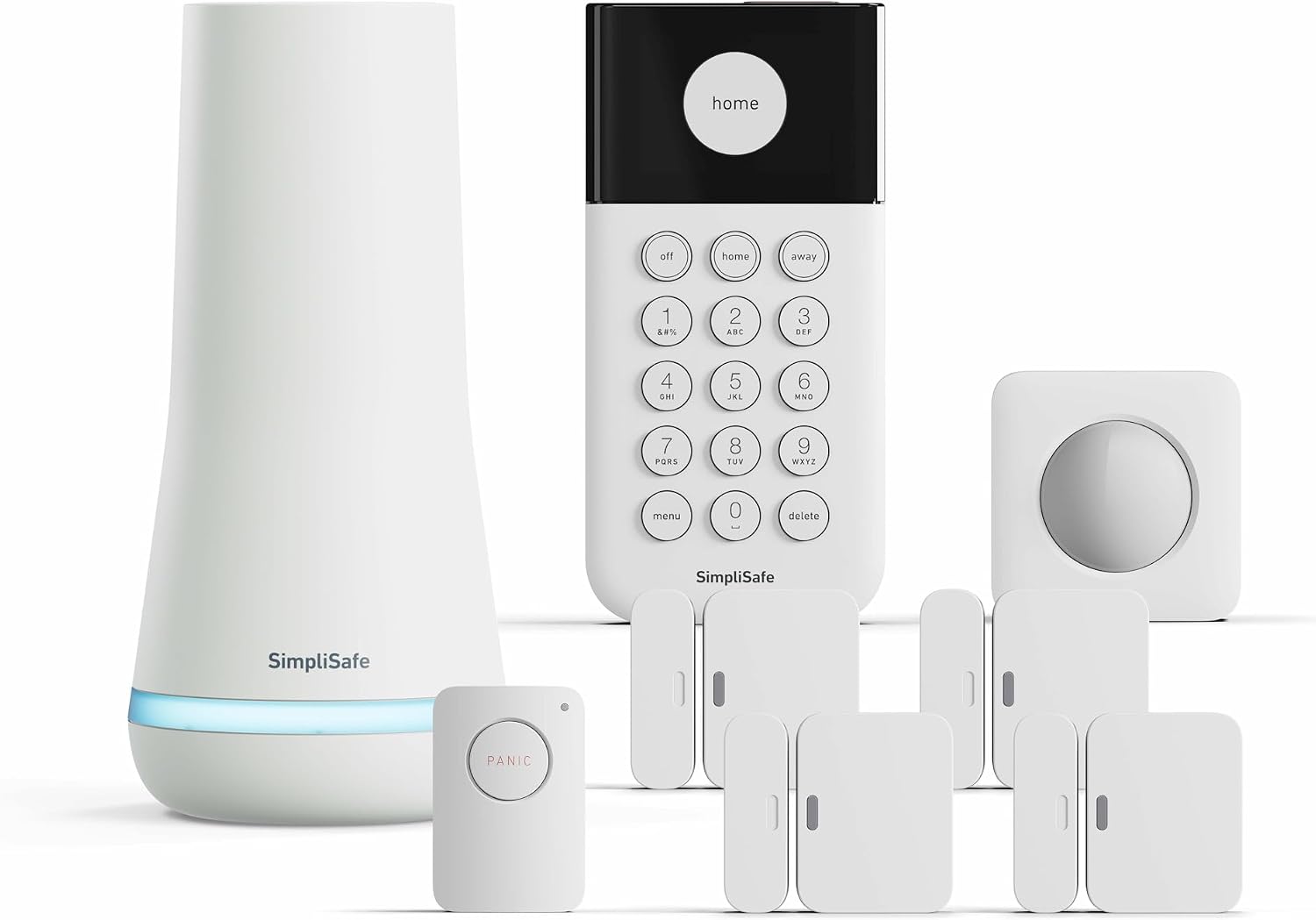
SimpliSafe earns consistent praise from self-described non-technical buyers. Tom’s Guide’s SimpliSafe Home Security Review attributes this to the system’s hub-and-sensor architecture: the base station handles all pairing automatically, sensors mount with peel-and-stick adhesive, and the app onboarding flow is genuinely linear with no branching decision points that stall inexperienced users. Multiple aggregated owner accounts describe completing full installation in under ten minutes.
SimpliSafe’s siren is manufacturer-rated at 95 dB — roughly equivalent to a lawn mower at close range — and receives specific, recurring positive mentions in owner reviews for real-world audibility. The Fast Protect professional monitoring plan adds live video verification before dispatch, meaning a monitoring agent reviews camera footage prior to calling emergency services. This meaningfully reduces false dispatch incidents, which matter in jurisdictions that assess fines after a threshold number of false calls. Security.org’s Home Security Systems Cost Guide identifies false dispatch fees as an underappreciated total-cost factor when comparing self-monitored versus professionally monitored plans.
SimpliSafe’s closed hardware architecture is a genuine trade-off to model before purchasing. The system does not support third-party sensors or any open protocol such as Z-Wave, Zigbee, or Matter. Security.org’s cost guide highlights this as a consistent buyer consideration: SimpliSafe’s proprietary sensor ecosystem means you are purchasing into their catalog for the life of the system, with no pathway to mixing in third-party components at lower cost.
SimpliSafe
$239.99
In stock on Amazon
Check price on AmazonEcosystem Expansion: How Much Does Growing the System Cost?
Starter kits are marketing; the expansion economics represent the real long-term commitment.
Ring Alarm has one of the broadest sensor and device catalogs of any residential DIY system. Door and window contact sensors typically retail in the $20–$30 range per unit. Motion detectors are priced similarly. Ring also integrates cameras, video doorbells, and smart lighting into its unified app ecosystem — which is genuinely useful for buyers building a layered system, but which also deepens dependency on a single platform. PCMag’s Ring Alarm Pro Review flags that Ring-to-Ring compatibility means third-party sensors are not directly supported without workarounds, which is worth knowing if you intend to repurpose sensors from a prior system.
SimpliSafe add-on sensors are proprietary and priced at a modest premium relative to Ring equivalents. Entry-level door and window sensors typically run $15–$25 each when purchased outside a kit. As noted above, no third-party sensor integration is available. Security.org’s Home Security Systems Cost Guide identifies this closed architecture as the most commonly cited long-term lock-in concern among SimpliSafe owners.
eufy has expanded its sensor lineup meaningfully over the last two years but remains narrower in catalog depth than Ring or SimpliSafe. Door sensors, motion detectors, and indoor and outdoor cameras are all available and HomeBase-compatible. Pricing is competitive with Ring’s equivalent components. The integration trade-off is on the smart home platform side: eufy’s connections to Amazon Alexa and Google Home are functional but less deeply integrated than Ring’s native Amazon ecosystem — an expected outcome given Amazon’s ownership of Ring.
False Alarms and the Dispatch Decision
False alarms are underrated as a buying criterion. Every system capable of professional dispatch creates potential for a false call, with associated jurisdiction-level fines after threshold incidents.
eufy eliminates this risk entirely in its default configuration: no automatic dispatch occurs because no professional monitoring is involved. The decision to contact emergency services always belongs to the account holder.
SimpliSafe’s Fast Protect plan adds live video verification before any dispatch, as documented in Tom’s Guide’s SimpliSafe Home Security Review. A monitoring agent reviews camera footage before placing the emergency call. This represents a meaningful operational difference from earlier-generation monitoring that dispatched based on sensor trigger alone.
Ring’s professional monitoring allows verbal verification through two-way audio on compatible Ring devices before dispatch, reducing false calls for buyers who have paired cameras or doorbells with their Alarm system.
For buyers on self-monitored plans at any of the three systems, the dispatch decision sits entirely with the account holder — which eliminates false dispatch fees but requires the owner to be reachable and responsive when an alert arrives.
The Decision Framework: If X, Then Y
Here is the honest routing logic based on the evidence across PCMag’s Ring Alarm Pro Review, Tom’s Guide’s SimpliSafe Home Security Review, CNET’s eufy Security Review, SafeWise’s Best Home Security Systems 2026 overview, and Security.org’s Home Security Systems Cost Guide:
If you want the smoothest full-ecosystem integration and are comfortable with a modest monthly fee, Ring Alarm’s pre-synced kits, 104 dB siren, broad device catalog, and Amazon ecosystem depth make it the natural choice. Read the Terms and Conditions before creating the account, specifically the sections governing law enforcement data requests and Neighbors app defaults.
If you are a non-technical user who needs to be operational in under 15 minutes and values professional monitoring with false-alarm safeguards, SimpliSafe’s setup experience and Fast Protect live-verification plan justify the higher monthly cost. Model the three-year total before committing — at $20–$30 per month, the monitoring cost exceeds the hardware cost within the first year.
If you are a renter, you refuse to pay recurring monitoring fees, or you are evaluating a multi-unit rental property where long-run operating expense matters more than premium feature depth, eufy’s no-subscription architecture, local storage, and tape-mount installation are structurally the right answer. Expansion options are narrower, but the total cost of ownership sits in a different league.
No system here is a bad product. The one that fails you is the one you chose without running the numbers first.
Frequently Asked Questions
Can I use any of these systems without a monthly subscription? Yes. All three function in a self-monitored mode without a paid plan. Ring and SimpliSafe send app alerts but do not professionally dispatch without a subscription. eufy operates fully without any subscription, including local video storage on the HomeBase.
How loud are the sirens on each system? SimpliSafe’s siren is manufacturer-rated at 95 dB. Ring Alarm’s base station siren is rated at 104 dB. eufy’s HomeBase siren is also rated at 104 dB. Real-world audibility depends on placement and building construction.
Do I need professional installation or can a non-technical person handle it? All three are self-install systems. SimpliSafe and Ring both have guided app flows that non-technical reviewers consistently complete without difficulty, as documented in Tom’s Guide’s SimpliSafe Home Security Review and PCMag’s Ring Alarm Pro Review. eufy’s tape-mount design requires no tools at all.
What happens to my system if I stop paying for monitoring? Ring and SimpliSafe revert to local siren activation and app-only alerts — no professional dispatch. Sensors and the hub continue to function. eufy is unaffected, since it does not rely on a paid plan for core operation.
Can I expand the starter kit later, and how much do add-on sensors cost? Yes. Ring and SimpliSafe both offer add-on sensor catalogs; individual contact sensors typically run $15–$30 depending on brand and current promotions. eufy’s catalog is narrower but growing, with competitive pricing. All three systems use proprietary sensors — no cross-brand mixing is supported.
How do these systems handle false alarms? eufy avoids professional false dispatch entirely since emergency contact requires the owner’s personal action. SimpliSafe’s Fast Protect plan uses live video verification before dispatching, which materially reduces false calls. Ring’s monitoring allows verbal verification through compatible two-way audio devices. Self-monitored plans on any system place the dispatch decision fully in the owner’s hands.