August 4, 2026 • Kwame Osei-Bonsu • 11 min reading time • Prices verified June 18, 2026
Standalone Alarm Sensors for Renters and Parents: UltraPro Contact Alarms vs. Smart Ecosystem Sensors
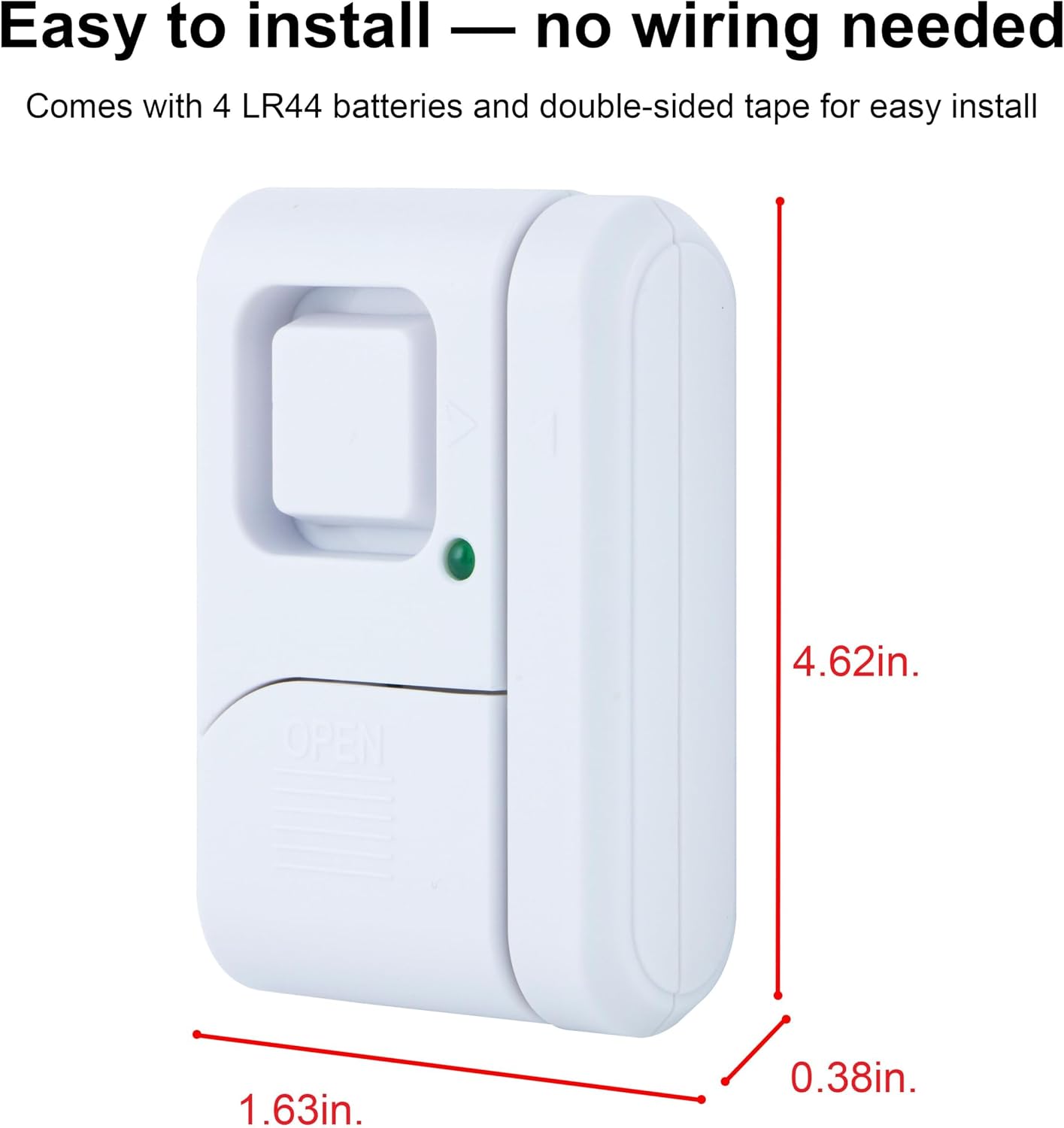
A contact alarm — sometimes called a door alarm or window alarm — is a small device that makes noise (or sends a notification) whenever the gap between two magnetic pieces grows, meaning a door or window has opened. At the simplest end, that means a $7 device that beeps loudly. At the complex end, it means a Zigbee or Matter radio chip inside a $25–$45 sensor that talks to your smart-home hub and pings your phone anywhere in the world. Both devices do fundamentally the same job — detect an opening — but the similarities end there. This article walks through when the dumb-but-loud standalone alarm wins, when you need a networked smart sensor, and how four real-world product lines (UltraPro, Ring, Aqara, and Eve) stack up for the buyers who actually need them: renters who can’t drill, parents of kids or adults who need close monitoring, and landlords managing multiple doors remotely.
| EDITOR'S PICKAqara Zigbee Door and Window Se… | Mid-tierUltraPro Personal Security Wind… | Budget pickAqara Zigbee Door and Window Se… | |
|---|---|---|---|
| Pack size | 3 | 4 | 1 |
| Hub required | ✓ | — | ✓ |
| Works with | HomeKit, Alexa | — | HomeKit, Alexa |
| Alarm type | — | Chime/alarm | — |
| Zigbee | ✓ | — | ✓ |
| Price | $49.99 | $20.13 | $17.99 |
| See on Amazon → | See on Amazon → | See on Amazon → |
Why Standalone Alarms Still Deserve a Seat at the Table
It is tempting to dismiss a battery-powered door beeper as a throwback when Ring and Arlo dominate the shelf. That instinct is wrong — and one verified buyer’s account explains why more clearly than any spec sheet could.
A parent of a child with a developmental disability described installing UltraPro contact alarms on bedroom and exterior doors specifically because their child wanders at night and cannot be relied upon to announce movement. The parent didn’t need a push notification at 2 a.m. — they needed an 85-decibel alarm loud enough to wake them from the next room, immediately, with no app, no hub, no Wi-Fi dependency, and no subscription. The UltraPro delivered exactly that. After four months of daily use, the same buyer summarized it with a phrase worth quoting in full: “a limited alarm that provides limited security very effectively.”
That framing is honest and should anchor how you think about this entire category. Standalone alarms are not compromises — they are purpose-built tools. If your use case fits their scope, they are the right tool. If it doesn’t, you need a smart sensor. The decision isn’t about budget; it’s about what the alarm needs to do.
Standalone audible alarms are the right tool when:
- You need immediate, local, in-room alerting (wandering family member, deterring casual intruders)
- There is no Wi-Fi or you don’t want to depend on it
- You are renting and cannot modify door frames or walls
- You need something a non-technical household member can operate and reset
Smart ecosystem sensors are the right tool when:
- You need remote notification (you’re not home, you manage multiple properties)
- You want event logging, automation triggers, or integration with cameras
- You’re building a layered system where sensors feed a broader alarm ecosystem
- Local alerting is secondary to awareness and documentation
The Four Products: What the Evidence Actually Shows
Each product below occupies a distinct tier. Read the tier marker at the end of each section to quickly locate your starting point, then read the full section to understand the trade-offs.
UltraPro Standalone Contact Alarms
UltraPro’s peel-and-stick contact alarms are the clearest example of the “limited but effective” category. Verified buyers consistently report the adhesive holding well on painted interior doors and door frames — though exterior doors exposed to temperature swings and humidity get more mixed results. The units run on common CR2032 or similar coin-cell batteries, with owners reporting 12–18 months of standby life under normal use, which translates to genuinely low maintenance.
The alarm tone sits in the 85–105 dB range depending on the specific model — loud enough to wake most adults through a closed interior door, which is exactly what a night-wandering safety scenario demands. There is no app, no pairing, no hub. You peel, stick, and it works. Apartment Therapy’s guide to no-drill apartment security consistently surfaces this category as underrated, noting that renters with strict lease terms — no mounting hardware, no structural modifications — have almost no alternative that provides immediate local sound.
The honest limitation: UltraPro cannot tell you anything remotely. If the door opens while you’re away and the battery dies mid-winter, you find out when you return. There’s no log, no notification, no history. “Limited security, very effectively” is exactly right — don’t ask it to be something it isn’t.
Aqara
$17.99
In stock on Amazon
Check price on AmazonRing Contact Sensors (Multi-Pack)
Ring’s contact sensors are the on-ramp to the Ring Alarm ecosystem — a battery-powered, hub-dependent sensor that communicates with the Ring Alarm Base Station and, by extension, Ring’s professional monitoring network. For single-sensor buyers, they are reliable and well-reviewed. For bulk buyers purchasing multi-packs for a newly rented or newly purchased home, there is a documented issue worth calling out explicitly.
Multiple verified buyers purchasing six-packs report a tamper-mode activation problem that prevents sensors from pairing correctly. In at least one documented case, a buyer worked through an entire six-pack before identifying a single working unit, ultimately resolving the problem only after a methodical full-reset process. The fix exists — cycling the tamper contact, performing a full factory reset, then re-pairing — but it is not intuitive, and customer support responses on this issue have been inconsistent.
If you’re buying Ring contact sensors in bulk for a new property: budget 30–60 extra minutes for setup friction and test each sensor individually before mounting. This is not a dealbreaker, but it is a real cost in time.
The bigger structural limitation: Ring sensors require a Ring Alarm Base Station. They will not function as standalone audible alarms. They will not communicate with SmartThings, Home Assistant (natively), or any non-Ring hub. PCMag’s 2025 edition of “The Best Smart Home Security Systems” identifies Ring’s ecosystem as among the more closed in the category — excellent if you’re building within Ring, problematic if you’re not.
By the numbers:
- Ring contact sensor: approximately $20 per unit standalone, approximately $15 per unit in a multi-pack
- Ring Alarm Base Station (required): $100–$200 depending on kit
- Ring Protect subscription (for push notifications and history): approximately $100 per year per location
- 3-year total cost for a 6-sensor installation: approximately $450–$600
UltraPro
$20.13
In stock on Amazon
Check price on AmazonAqara Zigbee Contact Sensors
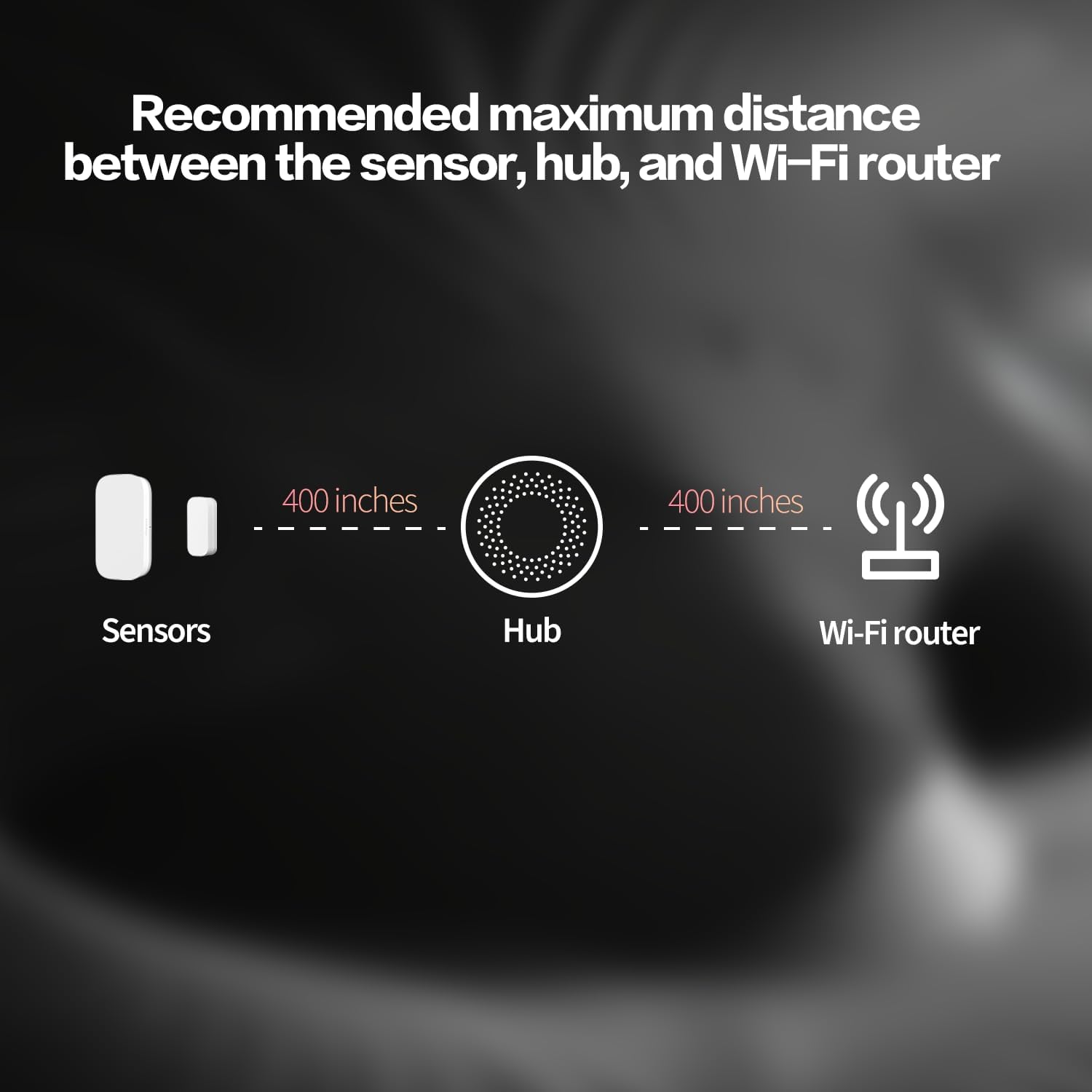
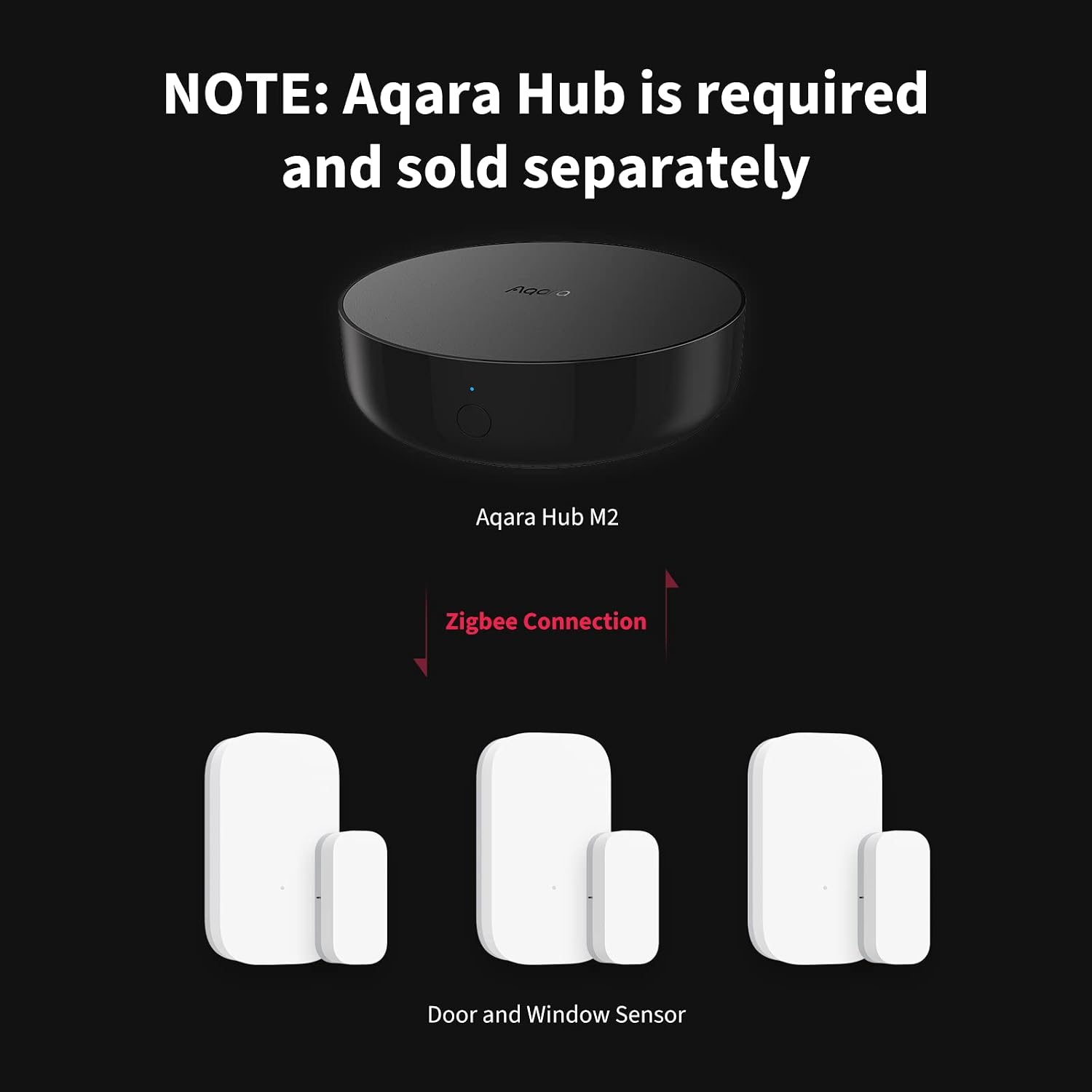
Aqara sensors represent the technical enthusiast’s play: inexpensive, small, well-built, Zigbee-native, and capable of working with multiple hubs — but with a pairing process that punishes impatience.
Multiple buyer reports document that successful pairing requires a precisely three-second button press. Shorter presses do nothing; longer presses put the device into a different mode. This is not a nuance buried in a manual — it’s a consistent friction point that generates negative reviews from buyers who never figure it out. Once paired, however, reviewers consistently praise reliability and battery life. Manufacturers rate the CR2032 at approximately 2 years; owners report 18–30 months in practice.
The hub question is where Aqara gets interesting for the architecture-minded buyer. The listing language implies Aqara Hub exclusivity, but this is not absolute. Tom’s Guide’s 2025 coverage of smart home sensors documents that Aqara contact sensors can pair with Home Assistant running a compatible Zigbee USB coordinator, and SmartThings compatibility is also reported in that same coverage and in community testing. This matters: Aqara sensors are among the most affordable per-unit options for a multi-sensor, local-storage build, and being able to run them on an open Zigbee coordinator rather than a proprietary hub preserves your exit options.
The limitation: Aqara sensors are not audible alarms. They are pure detection-and-notification devices. You need a hub, an app, and optionally an automation to trigger a chime or siren. They are not appropriate for the wandering-child use case where an immediate, loud, local sound is the entire point.
UltraPro
$20.13
In stock on Amazon
Check price on AmazonEve Door & Window Sensors (Matter/HomeKit)
Eve’s Matter-enabled contact sensors represent the premium end of the no-subscription smart sensor category. Matter — a newer interoperability standard backed by Apple, Google, Amazon, and the broader industry — is designed to let sensors work across ecosystems without cloud lock-in. Eve’s implementation allows local control through a HomePod Mini, Apple TV 4K, or compatible Google and Amazon hubs.
The catch documented in buyer reviews: the QR code setup process has a reproducible failure mode on older iPhones. At least one buyer with an iPhone 12 Pro was unable to scan the setup QR code successfully and ultimately had to use an iPad to complete onboarding. This suggests a camera or software compatibility issue that Eve has been slow to publicly acknowledge. If you’re running older Apple hardware, factor in this friction before purchasing.
The more important structural question is hub dependency for remote access. SafeWise’s coverage of door and window sensors notes this as a consistent limitation of locally-processed Matter implementations: if your HomePod Mini goes offline — power outage, network disruption, or the device is simply unplugged — you lose remote push notifications. The sensor itself continues to detect opens and closes and logs events locally, but you will not receive alerts until the hub comes back online.
Eve’s genuine strength is long-term ecosystem durability. Matter is an open standard; if Eve discontinues a hub or a product line, your sensors can theoretically migrate to any Matter-compatible controller. This is lock-in protection that Ring and even Aqara (without open-hub pairing) cannot match at this price tier. CNET’s 2025 coverage of home security systems identifies Matter compatibility as an emerging differentiator for buyers who want to avoid being stranded by a discontinued proprietary platform.
Aqara
$49.99
In stock on Amazon
Check price on AmazonFrequently Asked Questions
Do the UltraPro standalone alarms work without Wi-Fi or a smartphone? Yes, completely. UltraPro contact alarms contain no radio, no connectivity, and no app dependency. They operate on battery power alone and alarm locally when triggered. This is their defining feature, not a limitation.
Can Ring contact sensors work without a Ring Alarm Base Station? No. Ring contact sensors communicate with the Ring Base Station using a proprietary protocol. Without the base station, they will not pair, will not alarm, and will not send notifications. They are ecosystem-dependent components, not standalone devices.
Will Aqara Zigbee sensors work with a non-Aqara hub like a compatible Zigbee USB coordinator or SmartThings? Based on documented buyer experience and coverage in Tom’s Guide’s 2025 smart sensor guide, yes — Aqara sensors can pair with Home Assistant running a compatible Zigbee USB dongle, and SmartThings compatibility is also reported. The Aqara Hub is not strictly required, though Aqara-specific automations and app features will not be available outside the native ecosystem.
What happens to Eve Matter sensors if my HomePod Mini goes offline? The sensor continues to detect opens and closes. Remote push notifications to your iPhone will stop until the hub comes back online. Events may be logged locally and sync when connectivity restores, depending on firmware version. Treat the HomePod Mini as a single point of failure for remote alerting.
How long do batteries last in standalone door alarms versus smart ecosystem sensors? Standalone alarms like UltraPro: owners report 12–18 months on standby. Smart sensors vary: Aqara sensors are manufacturer-rated for approximately 2 years, with owners reporting 18–30 months; Ring sensors typically last 12–24 months depending on trigger frequency; Eve sensors are rated at approximately 2 years. Smart sensors in high-traffic homes will trend toward the lower end of that range.
Are peel-and-stick contact sensors strong enough to stay on a frequently used exterior door? Interior doors: generally yes, with quality adhesive and proper surface prep. Exterior doors: more variable. Temperature swings, moisture, and direct sun degrade adhesive bond over 6–18 months. Buyers consistently recommend cleaning the surface with isopropyl alcohol before application and pressing firmly for 30–60 seconds. Apartment Therapy’s no-drill apartment security guide notes that removable adhesive products are designed for interior use and should be treated accordingly — for exterior high-use doors, a supplemental screw mount (where the lease allows) is more reliable long-term.
The Decision Rule
If you need immediate, local, audible alerting — for a wandering family member, a renter who can’t install hardware, or a deterrent that works without any infrastructure — UltraPro standalone alarms are the right tool. They are exactly what they claim to be.
If you need remote notification, event logging, or integration with a broader smart-home system, you need an ecosystem sensor:
- Building inside Ring Alarm already? Ring sensors are the natural fit — just plan for setup friction on bulk orders and account for the ongoing subscription cost.
- Building a local-first, multi-hub system on Home Assistant or an open Zigbee coordinator? Aqara sensors offer the best cost-per-unit and genuine hub flexibility once you clear the three-second pairing hurdle.
- Apple household, want open-standard future-proofing, and don’t want a subscription? Eve Matter sensors are the premium choice — budget for potential setup friction on older iPhones and understand the hub dependency for remote alerting.
No single product wins across all use cases. The buyer who tries to solve the wandering-child problem with a Ring contact sensor will be disappointed — and vice versa. Pick the tool that matches the job, not the one with the most features.