September 17, 2026 • Kwame Osei-Bonsu • 11 min reading time • Prices verified June 18, 2026
Subscription-Free Outdoor Camera Showdown: aosu, ANSQUE, SEHMUA, ARCCTV, and ANNKE for Wire-Free Whole-Home Coverage
If you’ve been shopping for outdoor security cameras lately, you’ve probably noticed the phrase “no subscription required” plastered across a lot of product listings. That phrase does real work — it promises you won’t be hit with a monthly cloud-storage fee just to watch your own footage. But “no subscription” is not the same thing as “works anywhere, any way you want.” Some cameras in this category still require an active internet connection to function at all. Others work entirely offline. And a few occupy a complicated middle ground that isn’t clearly disclosed until you’re already two hours into setup. This article compares five brands — aosu, ANSQUE, SEHMUA, ARCCTV, and ANNKE — across exactly those distinctions, so you can make a decision with your eyes open before you mount anything on a wall.
Whether you’re covering a rural property with spotty WiFi, monitoring an active renovation site, or replacing a five-year-old system at a vacation home, the right camera depends less on megapixels than on how the footage gets stored and what the camera can do when your network goes down.
| EDITOR'S PICKaosu Security Cameras Outdoor W… | Mid-tierSEHMUA Solar Security Cameras W… | Budget pickLutron Maestro Motion Sensor Li… | |
|---|---|---|---|
| Camera count | 4 | 1 | — |
| Resolution | 2K | 2K | — |
| Power source | Solar | Solar | — |
| Pan & tilt | 360° | 360° | — |
| Night vision | Color | Color | — |
| Subscription | None Required | — | — |
| Price | $349.99 | $42.99 | $39.98 |
| See on Amazon → | See on Amazon → | See on Amazon → |
What “No Subscription” Actually Means — and Where It Gets Complicated
Let’s anchor on a real buyer experience before diving into specs. A documented reviewer complaint about the aosu SolarCam line — specifically the D1 Max 4K PTZ model — reveals a critical gap in how “no subscription” is marketed versus how the hardware actually behaves. The reviewer spent a full day troubleshooting a unit that refused to operate reliably, eventually reaching technical support, who confirmed the camera requires an active internet connection to function — even for local SD card recording in some firmware states. The marketing language implied otherwise.
This is not a fringe complaint. PCMag’s evaluation of the broader home security camera category (PCMag editorial staff, “The Best Home Security Cameras of 2025,” PCMag) notes that “local storage” and “offline operation” are not interchangeable terms, and that buyers should confirm both explicitly before purchasing. The distinction matters most in three scenarios: rural properties on cellular or satellite connections with high latency, homes that experience regular internet outages, and construction or agricultural sites with no broadband at all.
The practical definition you need:
- No subscription = no mandatory monthly fee for cloud storage or monitoring
- Local storage = footage saves to an SD card or NVR on your property
- Offline operation = the camera records and functions without any internet connection active
A camera can check one or two of those boxes without checking all three. Confirm which boxes apply before you buy.
Brand-by-Brand Decision Framework
The five brands below are organized from most accessible to most infrastructure-intensive. Each section closes with a tier marker indicating where the product sits relative to price and capability.
aosu SolarCam D1 Max 4K PTZ
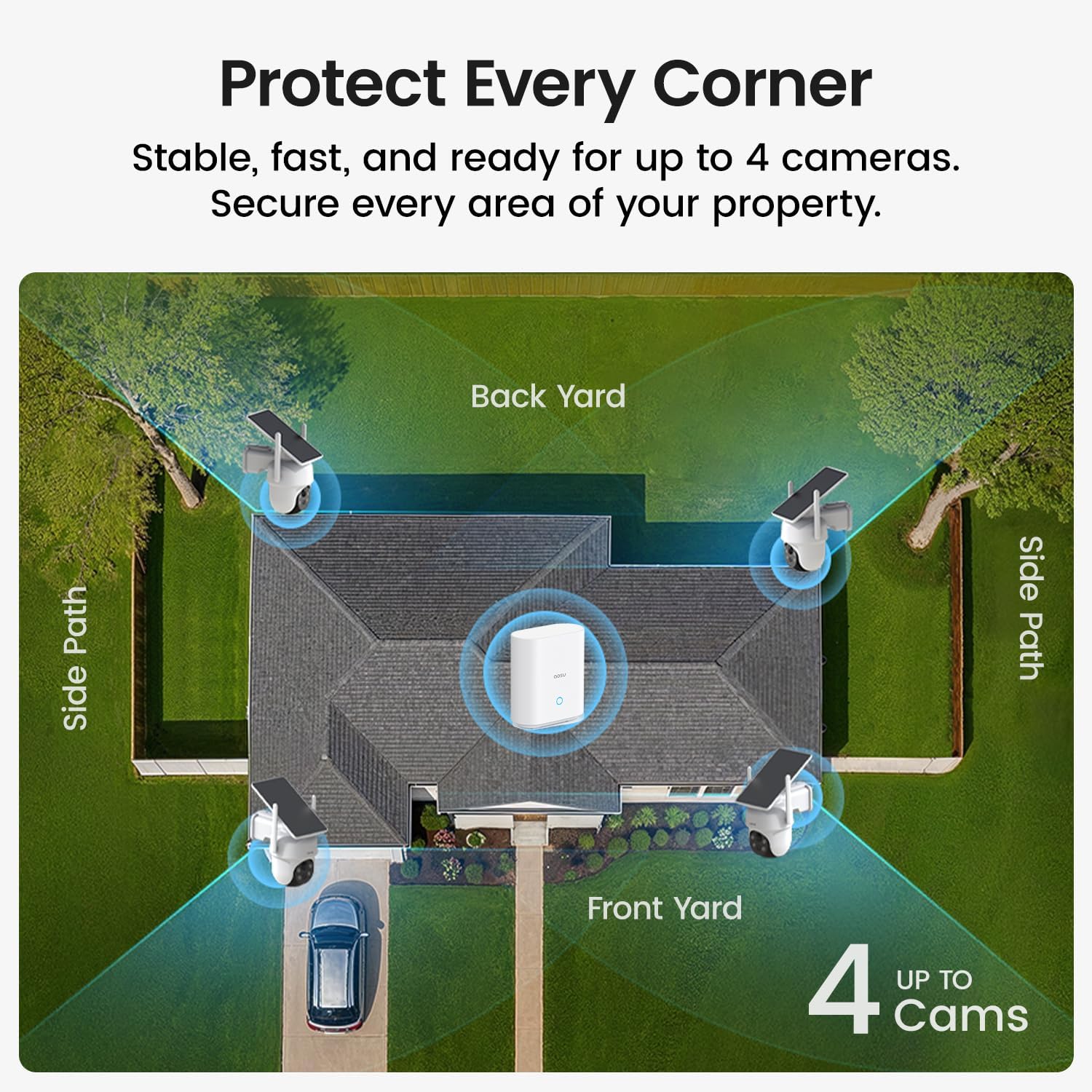
The aosu D1 Max is the most feature-forward camera in this comparison on paper: 4K resolution, pan-tilt-zoom (PTZ) auto-tracking, solar charging, and no mandatory subscription. Reviewers replacing aging five-year-old systems — particularly at lake houses and vacation properties — are drawn to the PTZ auto-tracking as a way to get full-perimeter coverage from a single mounting point rather than running four fixed cameras.
The honest tradeoff: aosu’s cloud-dependent architecture is the brand’s biggest liability. Based on aggregated owner reviews and the technical support confirmation noted in the opening section, the D1 Max’s functionality is meaningfully degraded without internet. If your vacation property has reliable broadband, aosu delivers impressive specs per dollar. If it doesn’t — or if your goal is true offline resilience — the architecture works against you.
Tom’s Guide’s coverage of solar security cameras (Tom’s Guide editorial staff, “Best Solar Security Cameras,” Tom’s Guide) consistently flags setup friction and cloud dependency as top complaint categories in this product class. aosu’s PTZ tracking is genuinely competitive when the network cooperates, but the ceiling drops sharply when it doesn’t.
If X, then Y: If you have stable WiFi at the property and want maximum coverage from a single camera, aosu’s PTZ tracking is worth considering. If you’re covering a property with intermittent connectivity, route your budget elsewhere.
SEHMUA
$42.99
In stock on Amazon
Check price on AmazonANSQUE Wireless Security Camera System
ANSQUE earns the most confident long-term endorsement of any brand in this comparison for rural buyers, and a specific reviewer account explains why: a Starlink-using property owner reported flawless operation after a one-hour setup — a task the owner had blocked out a full day for. That detail is meaningful. Setup speed reflects firmware maturity, app polish, and hardware that works as documented.
Tom’s Guide’s solar camera coverage (Tom’s Guide editorial staff, “Best Solar Security Cameras,” Tom’s Guide) consistently identifies setup friction as a top complaint in this product category. ANSQUE’s pattern in owner reviews runs contrary to that trend. The cameras appear to handle the high-latency, variable-bandwidth conditions of satellite internet — including Starlink — without the handshake failures that trip up some competitors.
ANSQUE systems support local SD card storage and, across multiple owner accounts, appear to function for motion-triggered recording even during internet interruptions. This is the architecture you want for rural deployments.
By the numbers:
- Typical ANSQUE kit: 4 cameras, local SD storage, no cloud subscription required
- Setup time reported by rural Starlink owner: approximately 1 hour versus full day budgeted
- Connectivity requirement for recording: internet helpful but not mandatory for local save
If X, then Y: If you’re running a rural property on Starlink or a cellular hotspot, ANSQUE is the brand with the most consistent owner-reported success in exactly that environment.
Lutron
$39.98
In stock on Amazon
Check price on AmazonSEHMUA 4G LTE Solar Camera
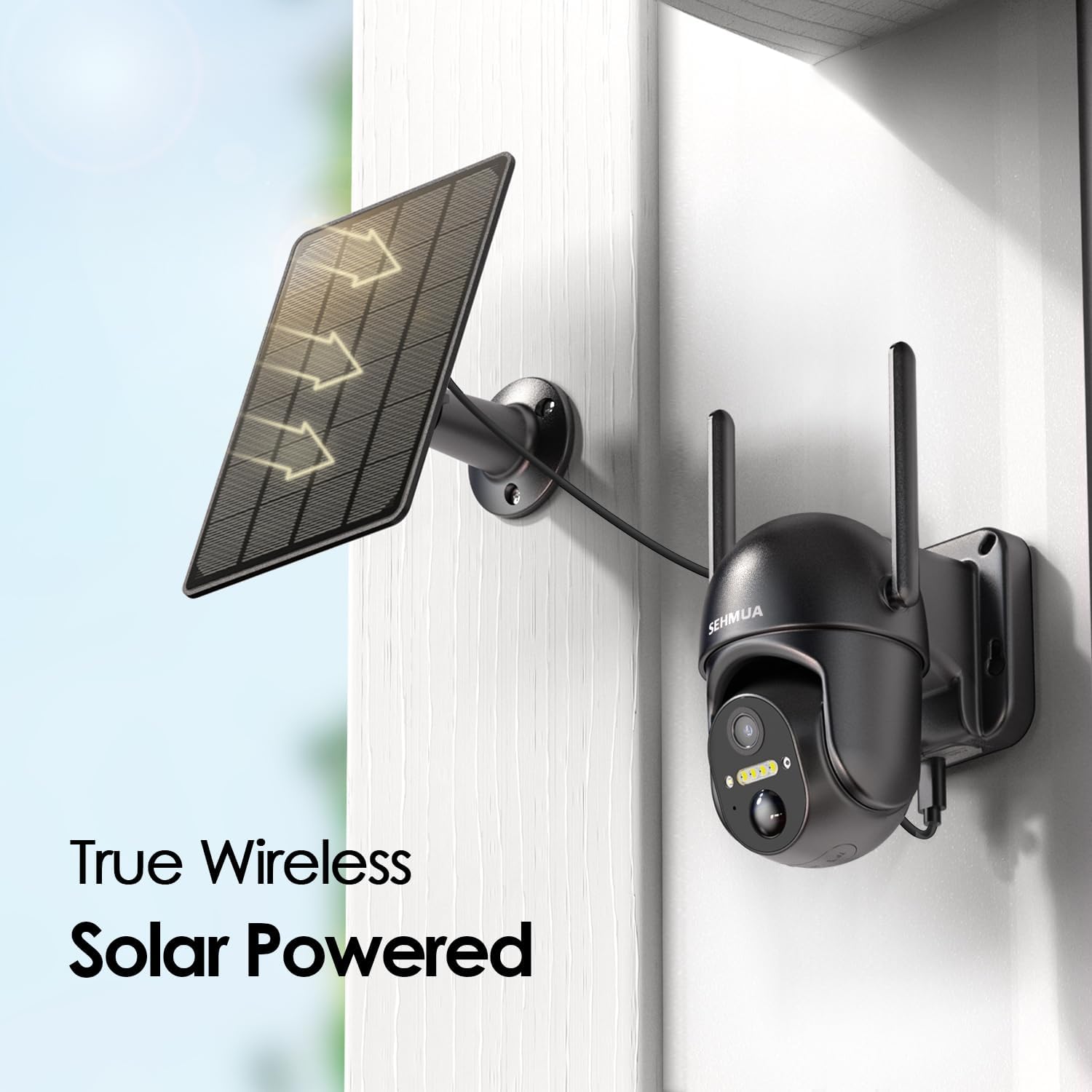
SEHMUA occupies a genuinely different market position than the other four brands here: it’s a 4G LTE cellular camera, meaning it connects to the mobile data network directly rather than your WiFi. One documented buyer purchased the SEHMUA specifically for active renovation site monitoring — a use case with no WiFi infrastructure and sometimes no shore power at all — and reported strong battery performance relative to expectations.
This is the right camera for properties with no broadband infrastructure, construction trailers, gated rural entrances, and agricultural outbuildings. The tradeoff is a per-month cellular data fee — typically a modest data plan sized for video clip uploads rather than continuous streaming, but a real ongoing cost regardless.
SafeWise’s wireless camera coverage (SafeWise editorial team, “Best Wireless Security Cameras,” SafeWise) notes that 4G cameras carry a structural advantage for truly remote deployments: they don’t depend on a property’s network health at all. The camera is its own connectivity. For renovation sites, hunting properties, or any location where “WiFi at the property” isn’t a given, that independence has real value.
If X, then Y: If your use case involves no existing WiFi — construction, remote land, agricultural sites — SEHMUA’s 4G architecture eliminates the setup dependency entirely. Factor in a data plan (typically $5–$15 per month depending on carrier and data tier) as a true carrying cost alongside any subscription savings elsewhere.
Lutron
$39.98
In stock on Amazon
Check price on AmazonARCCTV Wireless Outdoor Camera
ARCCTV surfaces consistently in owner reviews for two specific features that feel above their price tier: two-way audio and spotlight color night vision. Two-way audio lets you speak through the camera to someone at your door or property perimeter — useful for rental hosts who want to greet guests or deter porch loitering without being on-site. Color night vision via an integrated spotlight produces footage that’s actually usable for identification, versus the grainy black-and-white output of IR-only cameras.
CNET’s home security camera coverage (CNET editorial team, “Best Home Security Cameras for 2025,” CNET) notes that color night vision is increasingly available in the sub-$100 category but varies significantly in execution — spotlights that trigger too aggressively become a nuisance, and those that don’t trigger reliably undermine the feature’s value. Owner accounts for ARCCTV land positively on both counts more often than not.
ARCCTV supports local SD card storage. Based on available documentation and owner reporting, the cameras do not require a cloud subscription for core recording functions.
If X, then Y: If you’re equipping a short-term rental and want to be present remotely without committing to a monitoring subscription, ARCCTV’s two-way audio plus color night vision combination punches above its weight class for guest-facing deterrence and interaction.
Lutron
$39.98
In stock on Amazon
Check price on AmazonANNKE Outdoor Security Camera Systems
ANNKE occupies the most mature brand position in this comparison. The company has been building NVR (network video recorder) and IP camera systems long enough to have a genuine ecosystem story, and their outdoor cameras — particularly the wired and hybrid-wired PoE (Power over Ethernet) lines — are a reference point in the mid-tier security enthusiast community.
For wire-free coverage specifically, ANNKE’s solar and battery-powered outdoor cameras offer local NVR-connected storage as an option that most competitors in this comparison don’t provide at this price level. The ability to push footage to a local NVR rather than relying solely on an SD card inside the camera is a meaningful architectural advantage: NVR storage is more reliable, easier to manage, and not lost if a camera is stolen or damaged.
Security.org’s research on home security camera adoption (Security.org research team, “Home Security Camera Statistics and Consumer Data,” Security.org) consistently identifies NVR-based local storage as the preferred architecture among privacy-conscious buyers who want to avoid cloud dependency entirely. ANNKE’s ecosystem supports that approach more completely than the other brands in this comparison.
If X, then Y: If you’re building a multi-camera system and want genuine local-first architecture with no cloud dependency — and you’re comfortable with slightly more setup complexity — ANNKE’s NVR-compatible outdoor line is the most robust long-term investment in this comparison.
SEHMUA
$42.99
In stock on Amazon
Check price on AmazonFrequently Asked Questions
Do these solar cameras truly work with no internet at all, or do they need WiFi for setup?
Most require WiFi or cellular data for initial setup — the app needs to pair with the camera and push firmware. After that, the picture splits: ANSQUE and ANNKE NVR setups record locally without ongoing internet. aosu has confirmed limitations here based on owner-reported technical support interactions. SEHMUA bypasses WiFi entirely via 4G. Always treat “works offline” as a question to confirm with the manufacturer before mounting.
What SD card size do I need, and does it loop-record automatically?
Most of these cameras support microSD cards up to 128GB or 256GB. Loop recording — where the camera automatically overwrites the oldest footage when the card is full — is standard across all five brands reviewed here, but confirm it’s enabled in the app after setup. At 1080p resolution with motion-triggered recording rather than 24/7 continuous capture, a 128GB card typically holds 15–30 days of clips depending on activity level.
How long will a solar outdoor camera last through a cloudy week in winter?
Manufacturer specs typically cite 3–7 days of operation on a full battery charge with no solar input. Owner reports from northern climates suggest 4–5 days is a reliable planning figure during sustained overcast periods in December through February. Cameras with larger integrated batteries in the 6,000–10,000mAh range perform meaningfully better than those with smaller packs. If your property experiences week-long overcast stretches in winter, size the battery spec accordingly.
Can I view footage locally without using the cloud or the manufacturer’s app?
For ANNKE NVR-connected setups, yes — footage is accessible directly via the NVR interface on a local network without routing through manufacturer servers. For SD card-only cameras such as aosu, ARCCTV, and ANSQUE standalone units, accessing footage without the app typically requires physically removing the card and reading it on a computer. True local network playback without the app is rare in this price tier outside of NVR-based builds.
Is a 4G cellular camera worth the per-month data fee compared to a solar camera on a slow rural connection?
Run the math against your specific use case. If your rural WiFi is functional but slow, a solar WiFi camera from ANSQUE or ANNKE will generally work — slow upload just means longer sync times for cloud clips, but local recording isn’t affected. If you have no WiFi, or if the connection drops for days at a time, the 4G data fee — typically $60–$180 per year for a low-data plan — is cheaper than the problems created by an unreliable connection. SEHMUA’s 4G architecture eliminates network dependency entirely, which has real value for active job sites and remote properties. Treat the data plan as a fixed annual cost in your total cost of ownership calculation.
The Decision Matrix
| Use case | Recommended brand | Why |
|---|---|---|
| Rural / Starlink property | ANSQUE | Proven in high-latency satellite environments; local recording confirmed |
| No WiFi / construction site | SEHMUA 4G | Cellular-native; no broadband dependency |
| Short-term rental / guest interaction | ARCCTV | Two-way audio plus color night vision at this price tier |
| Multi-camera local NVR build | ANNKE | Only brand with mature NVR ecosystem in this comparison |
| Single-camera PTZ coverage, reliable WiFi | aosu D1 Max | Best PTZ feature set, but requires stable internet |
The “no subscription” label is a starting point, not a finish line. What matters is whether the camera’s architecture matches your property’s actual infrastructure — and whether you’ve confirmed the offline behavior before the return window closes.