September 4, 2026 • Kwame Osei-Bonsu • 12 min reading time • Prices verified June 18, 2026
Solar Security Lights Compared: Tuffenough vs. MIHANI for Yards, Driveways, and Carports
If you’ve ever looked at a dark carport or shadowy driveway corner and thought “my camera can see motion, but it can’t see anything at night,” you’re already thinking about the right problem. Solar security lights are wire-free outdoor floodlights that charge themselves using a small built-in solar panel during the day and then use that stored energy to power a motion-triggered LED light at night. No electrician, no trenching, no utility bill impact. They’re not standalone security systems — think of them as the lighting layer that makes your existing cameras and your own eyes actually useful after dark. This article compares two models that have built a genuine following among homeowners and small landlords: the Tuffenough solar security light and the MIHANI solar motion light. We’ll walk through what owners actually experience, where each unit earns its keep, and which setup makes sense for your specific situation.
How Solar Security Lights Fit Into a Layered Security Architecture
Before diving into the head-to-head, it’s worth being precise about the role these products play — because the purchase decision changes depending on whether you’re treating them as primary deterrents or as lighting infrastructure supporting other tools.
Security.org’s 2025 Home Security Statistics research consistently shows that visible, motion-triggered lighting is one of the highest-ROI deterrents available at any budget level. The reasoning is behavioral: opportunistic intruders avoid environments where they’ll be seen. A well-lit driveway reduces that opportunity window, whether or not a camera is recording.
The more useful frame for the intermediate buyer is this: solar motion lights are the nervous system for your camera’s night vision. Most cameras — including the Ring Spotlight Cam, Blink Outdoor, and Wyze Cam v3 — have color night vision that is heavily dependent on ambient or supplemental light. A well-placed solar floodlight pointing at a driveway apron can be the difference between a grainy gray blob in your Ring footage and a license plate you could actually read.
Tom’s Guide, in its coverage titled “Best Outdoor Security Lights,” notes this pairing dynamic explicitly, pointing out that motion-triggered lighting synchronized with camera motion zones creates a “double-notification” effect — the light triggers, and almost simultaneously the camera catches the scene in useful detail.
Neither Tuffenough nor MIHANI is positioned to replace a hardwired 1,500-lumen security floodlight on a garage soffit. What they replace is the absence of light in spots where running wire is impractical: a detached carport, a fence gate at the back of a rental property, a storage shed, or the far end of a gravel driveway.
Tuffenough: What Owners Actually Experience
The name is a marketing choice, but the owner feedback is specific enough to take seriously. Across aggregated reviews, the pattern that emerges most consistently for Tuffenough is brightness that exceeds category expectations. Owners in carport and yard-perimeter use cases repeatedly note that the output feels closer to a hardwired fixture than to the dim, battery-struggling solar lights they’ve tried before. That’s a meaningful signal, because solar light reviews are littered with disappointed buyers who expected floodlight output and got a dim glow.
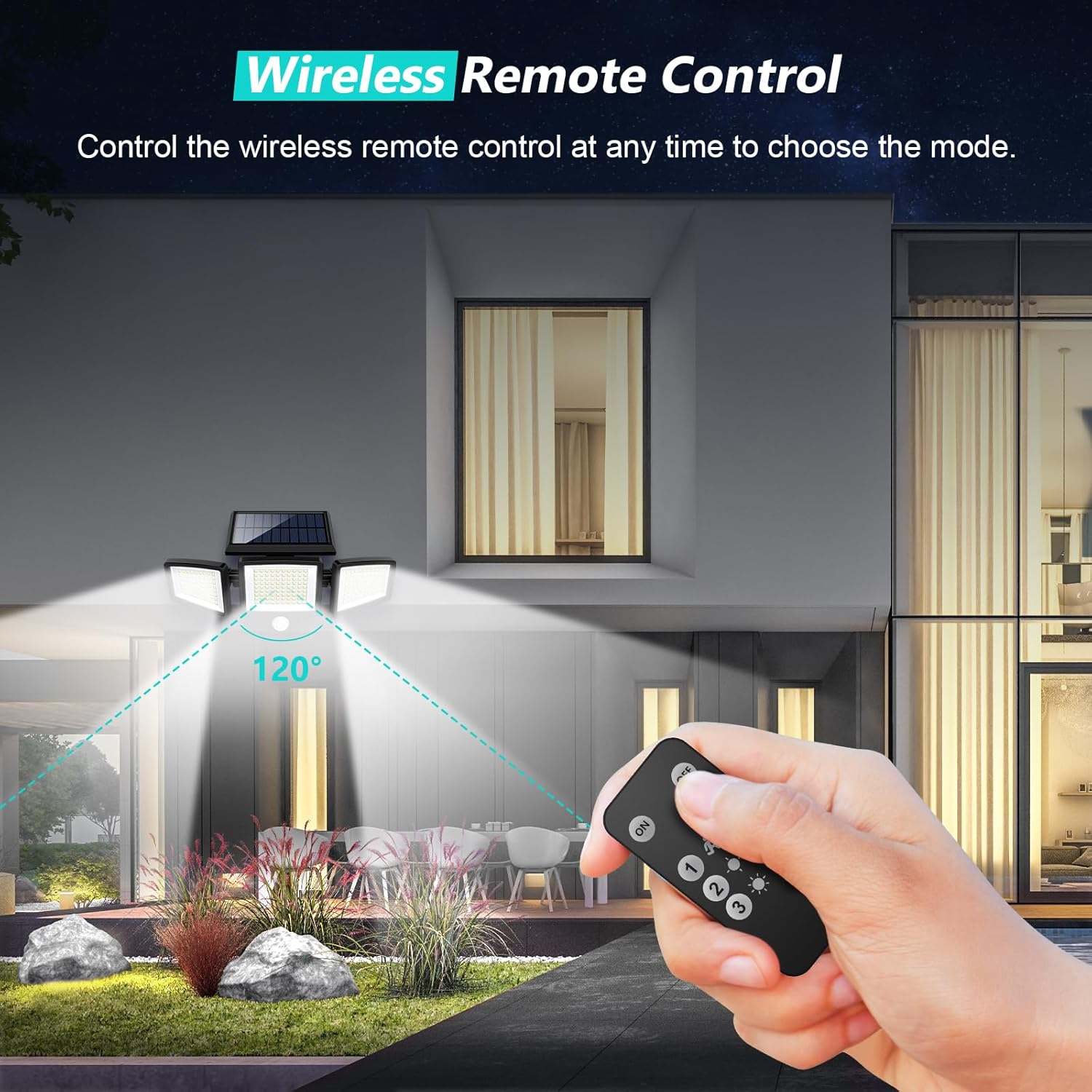
The feature that distinguishes Tuffenough most clearly from MIHANI in owner conversations is the included remote control. This isn’t just a convenience gimmick — it enables three distinct operating modes that meaningfully change how the light integrates into a security setup:
- Always-on dim mode: the light stays at low brightness continuously, providing baseline visibility without draining the battery for full-output triggering
- Motion-only mode: the light stays off until the PIR (passive infrared) motion sensor detects movement, then fires to full brightness
- Timer mode: the light can be set to run at full output for a defined period after dusk, useful for entry paths where guests or family arrive in a predictable window
For small landlords managing short-term rentals or multi-unit properties, the remote control matters operationally. You can reconfigure the light’s mode during a property walkthrough without pulling out a phone app or resetting the unit — which matters when you’re doing a quick between-guest inspection.
Owners also call out the sensitivity tuning as less frustrating than average for this category. False triggers — the light firing because a tree branch moved or a small animal crossed the sensor — are a recurring complaint in solar light reviews generally. Tuffenough owners don’t flag this problem at notable rates, which suggests the PIR sensor’s angle and sensitivity floor are reasonably well-calibrated from the factory.
Tuffenough: Best For Flexibility and Remote Management
| Spec | Published rating |
|---|---|
| Output | Up to 2,500 lumens (manufacturer-rated) |
| PIR detection range | Up to 30 feet |
| Operating modes | 3 (via remote: always-dim, motion-only, timer) |
| IP rating | IP67 (dust-tight, submersion-resistant) |
| Repeat purchase signal | Strong — consistent in aggregated reviews |
Tuffenough
$25.99
In stock on Amazon
Check price on AmazonMIHANI: What Owners Actually Experience
MIHANI’s owner base shows a slightly different profile. The most useful piece of intelligence in the review corpus — and the one that should directly shape your purchase decision if you’re in a northern climate or a frequently overcast region — is this: MIHANI owners consistently note that the light does not reach full performance until after the first full day of direct sun charging.
This is not a defect. It’s a battery initialization behavior that MIHANI should probably document more prominently, and it’s a crucial caveat for buyers who:
- Install the light in late fall or winter
- Are in the Pacific Northwest, upper Midwest, or northern New England where overcast stretches of 3–7 days are routine
- Plan to install at a property and immediately expect full output without a commissioning period
SafeWise, in its guide “Best Solar Motion Sensor Lights,” flags this initialization behavior as a category-wide pattern that disproportionately generates negative early reviews — buyers install, test immediately, declare the product defective, and leave a one-star review for a product that would have worked fine 24 hours later. Knowing this going in changes the evaluation completely.
Once initialized, MIHANI owners report reliable performance and — like Tuffenough — a strong repeat-purchase pattern. When a product shows up repeatedly in “bought again for another property” or “bought four more for the back fence” reviews, that’s a meaningful trust signal that the unit survived long enough to earn the second purchase.
MIHANI’s sensitivity and duration adjustments are handled via a panel-mounted control rather than a remote. For a set-and-forget installation on a property you manage remotely, this is a mild operational friction — you need physical access to the unit to change modes. For a homeowner’s own property where you’re present, it’s a non-issue.
CNET, in its article “Best Solar Security Lights of 2025,” notes that panel-mounted controls tend to be more durable over multi-year outdoor exposure than remote-dependent systems, since there’s no battery to replace in a secondary device. That’s a reasonable trade-off argument for MIHANI in permanent installations where the mode doesn’t need to change seasonally.
MIHANI: Best For Set-and-Forget Durability
| Spec | Published rating |
|---|---|
| Output | Up to 2,000 lumens (manufacturer-rated) |
| PIR detection range | 20–30 feet (sensitivity-dependent) |
| Operating modes | Adjustable via panel-mounted control |
| IP rating | IP65 (dust-tight, jet-spray resistant) |
| Repeat purchase signal | Strong — “bought more for the back fence” pattern in owner reviews |
MIHANI
$20.99
In stock on Amazon
Check price on AmazonHead-to-Head: The Decision Matrix
Here’s where the comparison earns its keep. Both products are doing essentially the same job — solar-charged, motion-triggered outdoor lighting — but they earn their keep in different situations.
Tuffenough vs. MIHANI: Flexibility and Mode Control
Tuffenough’s remote control system gives it a meaningful operational edge for buyers who manage multiple locations or want to seasonally adjust behavior. The ability to switch between always-dim, motion-only, and timer modes without climbing a ladder or visiting the property is genuinely useful for landlords and multi-property owners. MIHANI requires physical access to change modes, which is a friction point in remote-management scenarios.
Winner for flexibility: Tuffenough
Tuffenough
$25.99
In stock on Amazon
Check price on AmazonTuffenough vs. MIHANI: Climate and Initialization Reliability
MIHANI’s initialization caveat — needing a full sunny day before reaching rated performance — is the single most important piece of buyer intelligence in this comparison. In sun-reliable climates with consistent summer and shoulder-season exposure, it’s a non-issue. In northern or frequently overcast climates, it can generate a frustrating first experience if buyers don’t anticipate it. Tuffenough owner reports do not flag this initialization lag at comparable rates, suggesting either better out-of-box battery conditioning or a less pronounced behavior.
SafeWise’s “Best Solar Motion Sensor Lights” guide notes this pattern as a category-wide issue, not a MIHANI-specific defect — but MIHANI owners surface it more consistently than Tuffenough owners, which is meaningful signal.
Winner for cold-climate or overcast reliability: Tuffenough (slight edge)
Tuffenough
$25.99
In stock on Amazon
Check price on AmazonTuffenough vs. MIHANI: Long-Term Durability of Controls
This is where MIHANI earns its keep for permanent installations. A panel-mounted control has no secondary device to lose, no battery to replace, and no pairing relationship to maintain over years of outdoor exposure. CNET’s “Best Solar Security Lights of 2025” makes this point explicitly: remote-dependent systems introduce a second failure point that panel-mount systems avoid entirely. For a fence post installation you intend to leave in place for four or five years without adjustment, MIHANI’s control interface is actually the more durable choice.
Winner for long-term mechanical simplicity: MIHANI
MIHANI
$20.99
In stock on Amazon
Check price on AmazonCamera Pairing and Placement Principles
For camera-paired installs, both units work well as supplemental lighting for Ring, Blink, Arlo, or Wyze cameras. PCMag, in its coverage “The Best Smart Home Security Systems,” makes the key placement point clearly: the motion sensor and the camera’s motion zone should be aimed at the same approach vector. You want the light to trigger at roughly the same moment the camera starts recording — not ten seconds later when the subject has already moved out of frame.
The practical mounting guideline that appears across both CNET’s and Tom’s Guide’s outdoor security light coverage: mount at 6–10 feet of height and angle slightly downward to cover the ground-level approach zone. At that height, the PIR sensor covers the human-height movement corridor rather than triggering on mid-air movement from small animals or foliage.
The Honest Trade-offs Neither Brand Leads With
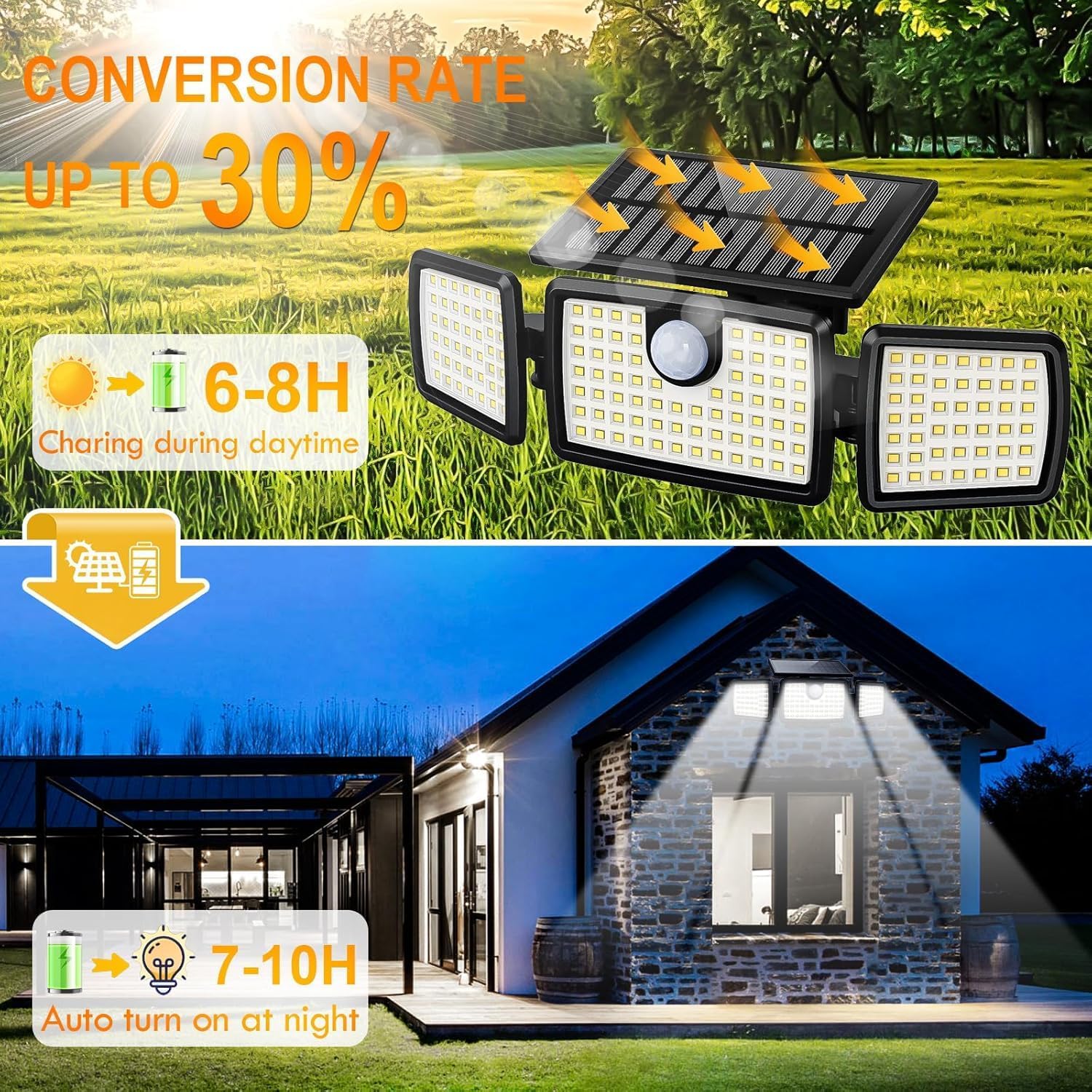
Solar security lights have a real limitation that neither Tuffenough nor MIHANI can engineer around: energy storage is finite and weather-dependent. A solar panel that receives 4–6 hours of direct sun on a clear day in July will charge a very different battery than the same panel receiving 1–2 hours of diffuse light on a December afternoon in Minnesota.
Most solar lights — including these two — handle this with a low-power fallback: if the battery drops below a threshold, the light either runs at reduced brightness or stops triggering on motion until the next charge cycle. This is the right failure mode (dim light is better than no light), but it means buyers in northern or heavily shaded locations need to set realistic expectations.
The practical mitigation: mount both units to maximize southern exposure (in the northern hemisphere), keep the solar panel face clean of dust or debris seasonally, and treat December–February performance in northern climates as degraded rather than representative.
Frequently Asked Questions
Will these solar lights charge enough on overcast or rainy days to work at night? Partially. Solar panels generate power even under cloud cover — typically at a fraction of their clear-sky output. One or two overcast days won’t kill performance, but a week of heavy cloud cover will deplete reserves. MIHANI owners in particular should remember the initialization caveat: the first full-performance night requires a full sunny-day charge.
How far away will the motion sensor trigger? Tuffenough’s PIR sensor is rated to detect motion up to 30 feet. MIHANI’s published specifications indicate a similar 20–30 foot range depending on mounting angle and sensitivity setting. Both perform best when mounted at 6–10 feet of height and angled slightly downward to cover the ground-level approach zone rather than the mid-air space where smaller animals pass.
Can these replace a hardwired security floodlight, or are they supplemental? They are supplemental by nature. A hardwired 1,500-plus lumen floodlight on a dedicated circuit provides consistent, weather-independent output that no solar unit in this category matches on a bad weather day. These lights earn their value in locations where hardwiring is impractical — detached structures, fence perimeters, rental property outbuildings.
Do I need any tools or an electrician to install either light? No electrician, no trench, no permit. Both mount with screws into an exterior surface — typically a 15-minute installation with a drill and basic hardware. The primary decision is mounting angle: orient the solar panel toward the south and the motion sensor toward the approach vector you want to cover.
How do I adjust sensitivity and duration modes on each unit? On Tuffenough, the included remote control cycles through modes — always-on dim, motion-triggered, and timer — without requiring physical access to the unit. On MIHANI, a small rotary or slider control panel on the unit itself handles sensitivity and duration; no remote is included. Both allow for adjustment without tools, though MIHANI requires you to be at the fixture.
The Bottom Line
If you’re building a security lighting layer around existing cameras and you want maximum flexibility across multiple locations — especially if you’re managing properties remotely — Tuffenough’s remote control and owner-reported brightness make it the more capable tool for dynamic or multi-mode deployments.
If you’re equipping a stable, permanent installation where simplicity and long-term mechanical durability of controls matter more than mode flexibility, MIHANI earns its repeat-purchase trust signal honestly and removes the secondary-device failure point that remote-based systems carry.
Neither product replaces a hardwired floodlight. Both represent a genuine upgrade over no light at all — and in the context of a layered security architecture, as Security.org’s home security research consistently reinforces, “no light at all” remains the most common and most correctable failure mode in an otherwise thoughtful system.